

How to Choose the Right Four-Pronged T-Nut for Your Project
When it comes to fastening systems, selecting the right type of T-nut can make all the difference in ensuring your project’s stability and longevity. The four-pronged T-nut, in particular, is widely used due to its reliable grip and versatility.
As one of the leading t-nut manufacturers in China, Xinchi is glad to share how to choose the best four-pronged T-nut based on your project’s thread requirements, material choice, board thickness, and the specific needs of high-strength applications.
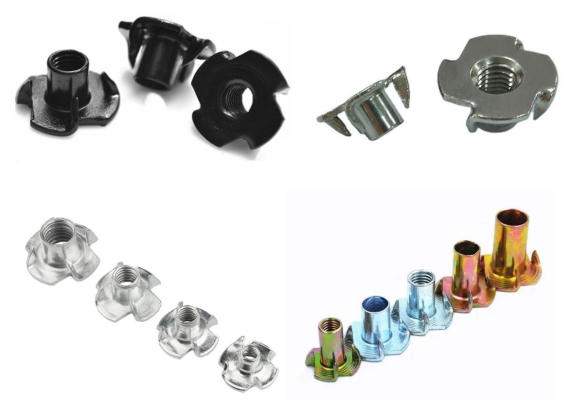
t nuts
Why Four-Pronged T-Nuts are a Great Choice for Your Project
Four-pronged T-nuts are designed for use in wood, MDF, and other soft materials, providing a secure anchoring solution. Their four-prong design provides a solid grip, making them less likely to spin or loosen over time than other types of T-nuts. They’re commonly found in furniture manufacturing, cabinetry, and DIY projects. Understanding how these nuts work in different applications will help you pick the right one for your needs.
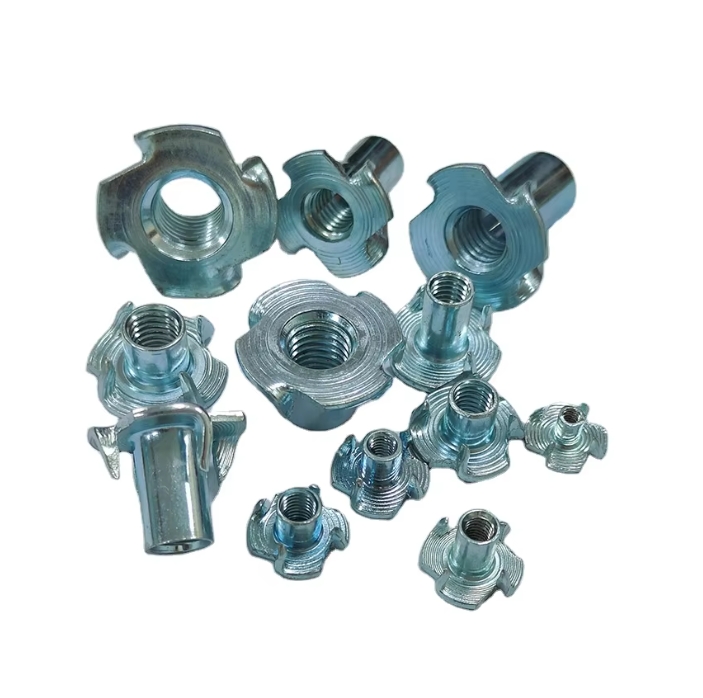
t nut
How to Choose the Right Thread Size for Your T-Nut
The first step in choosing a four-pronged T-nut is selecting the correct thread size. Thread size depends on the screws or bolts you plan to use with the T-nut. The most common sizes are M6, M8, and M10. Be sure to match the thread size of the T-nut with your bolts to avoid any issues with fit or security.
It’s also worth considering the application: for high-torque or heavy-duty projects, go for a T-nut that can handle the increased stress. A higher strength rating, available in both carbon steel and stainless steel, may be necessary.
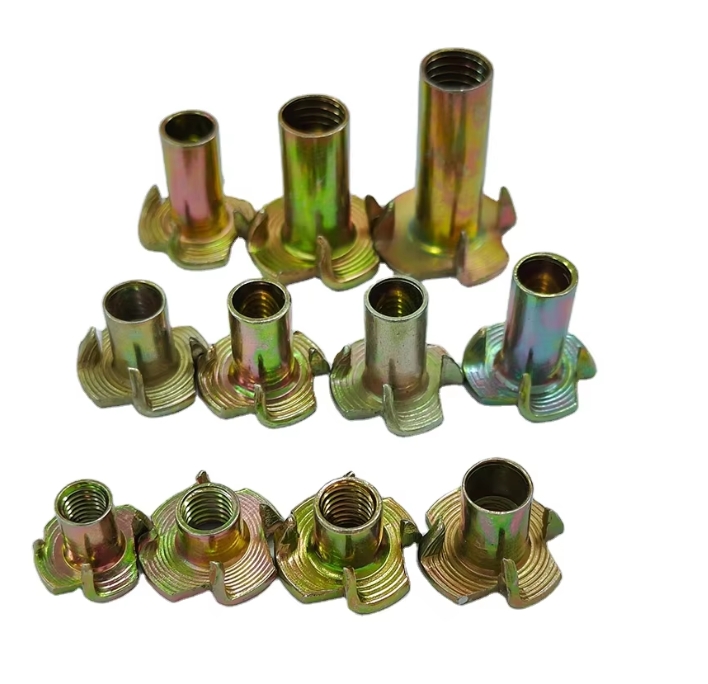
T nut DIN 1624
Material Matters: Carbon Steel vs. Stainless Steel
Material choice plays a big role in the performance and longevity of your T-nut. For general purposes, carbon steel is typically sufficient. It’s durable and cost-effective, making it a popular choice for many woodworking and furniture projects. However, if your project will be exposed to moisture or outdoor conditions, stainless steel T-nuts are a better option due to their resistance to rust and corrosion.
Think about the environment your T-nut will be used in. For indoor furniture or cabinetry, carbon steel works fine. But if you’re making something that’ll be used outdoors, or in humid conditions, stainless steel provides extra peace of mind.
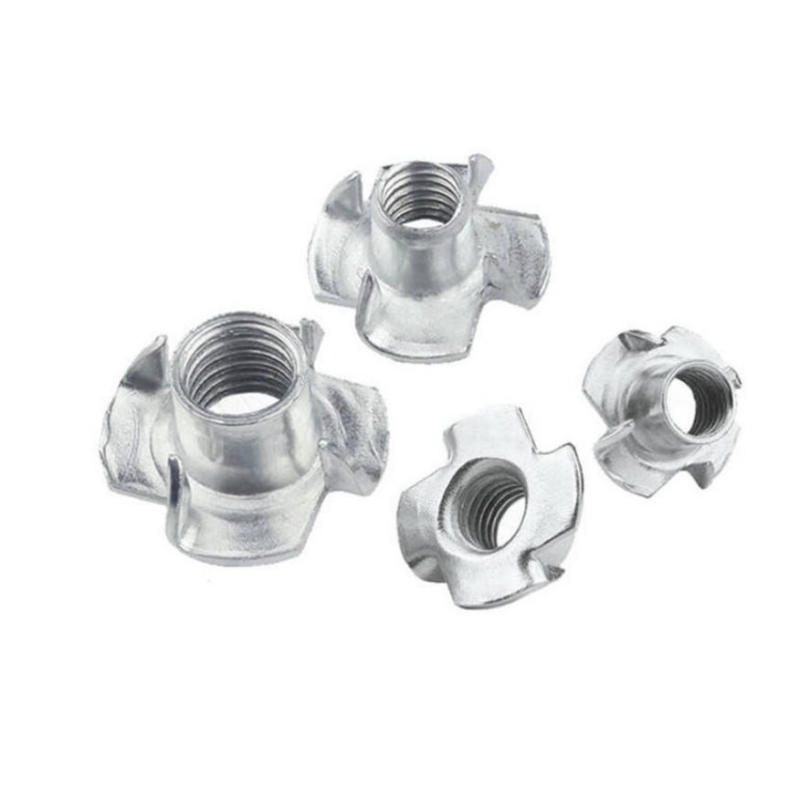
4 prong t nut
Matching Board Thickness to the Right T-Nut
The thickness of the material you’re working with is another important factor in choosing the right T-nut. If you’re working with thicker materials, you’ll want to opt for a T-nut with longer prongs. Longer prongs give the T-nut more surface area to grip onto, providing a more secure connection.
For thinner materials, a standard-length prong may suffice, but ensure that the prongs are able to grip the material firmly without damaging it. Choosing the right length ensures the T-nut doesn’t just sit on the surface; it should embed securely to hold up over time.
High-Strength Applications: Should You Use Extended T-Nuts?
When your project demands high strength, such as in heavy-duty furniture or machinery, you may need an extended four-pronged T-nut. Extended T-nuts have prongs that reach deeper into the material, offering a more secure anchor for projects that experience high pressure or heavy loads. These are great for furniture that will hold a lot of weight or any application where you need the T-nut to withstand significant stress.
If the application is extremely high-torque, an extended T-nut will help distribute the pressure across a larger area, making the connection more reliable over time.
Is an Anti-Rotation Tooth Necessary?
One feature that can make a huge difference in the longevity of your project is the anti-rotation tooth structure. This feature ensures that the T-nut doesn’t spin when you tighten the bolt, which can be a real problem in situations where you need a stable, non-moving connection. If you’re working on something that needs to be adjusted or disassembled frequently, like modular furniture, an anti-rotation T-nut is a great choice.
Anti-rotation teeth ensure that once the T-nut is installed, it won’t shift or loosen easily, even after many uses. This can prevent the nut from rotating out of place and compromising the integrity of your project.
Why Choose Xinchi Fasteners?
When it comes to fasteners, Xinchi Fasteners Co., Ltd. has been a trusted name since 2007. With 102 cold heading machines and a daily production capacity exceeding 10 million pieces, we pride ourselves on high-quality products and reliable service. Our factory spans over 30,000 square meters and features two six-story buildings, ensuring we have the capacity to meet any order size.
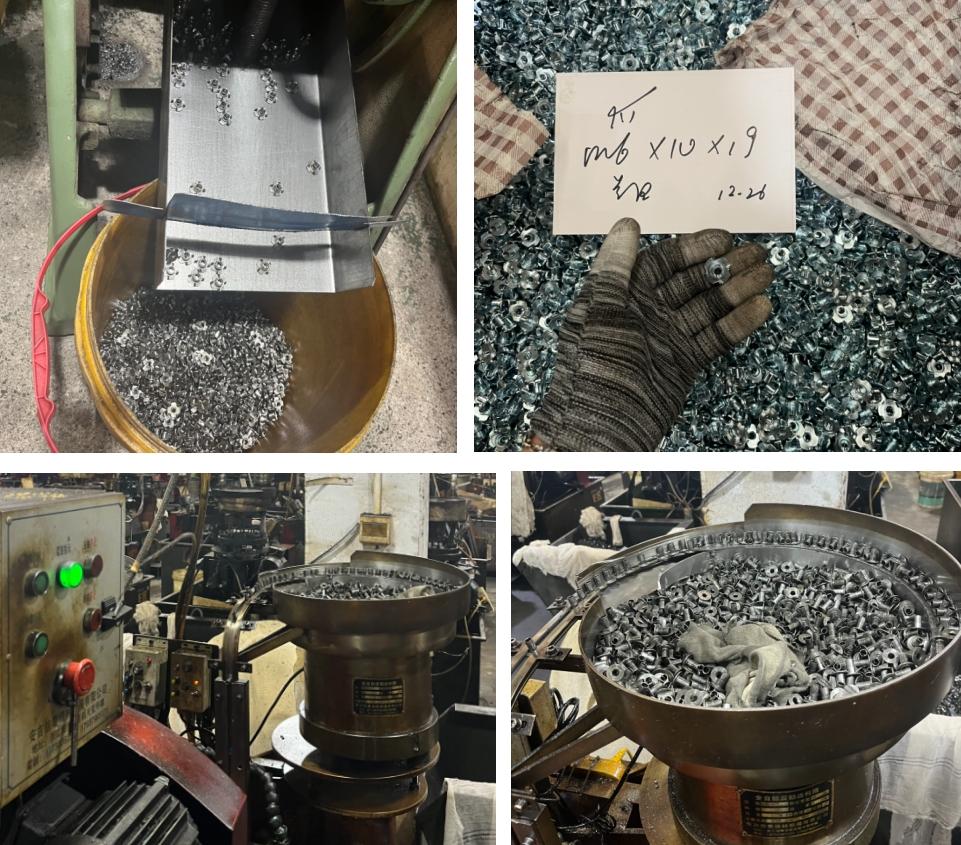
Xinchi Fastener Factory
We specialize in a wide range of fasteners, including high-strength four-pronged T-nuts, hopper feed T-nuts, screws, bolts, rivets, and washers. Whether you’re working on a small DIY project or a large-scale industrial application, Xinchi has the right fasteners for you.
Choosing the right four-pronged T-nut involves understanding the thread size, material, board thickness, and whether you need a high-strength version or one with an anti-rotation feature. With the right T-nut, you’ll get a secure, long-lasting connection for your project. And with Xinchi Fasteners’ expertise and extensive manufacturing capabilities, you can trust that we’ll meet all your fastening needs with precision and reliability.
Recent Comments