

How Tight Should a Castle Nut Be? Torque Reference and Practical Tips
When assembling mechanical systems, ensuring the proper tightening of components like castle nuts is crucial for the reliability and safety of the equipment. Castle nuts are widely used in various industries, including automotive, machinery, and aerospace, and their correct installation is essential to prevent loosening under vibration or load.
As a reliable fastener manufacturer, Xinchi is glad to introduce the proper torque specifications for castle nuts and share practical tips to ensure they’re tightened correctly.

castle nut
Understanding Castle Nut Torque Requirements
Castle nuts are designed with a series of slots along the top, allowing a cotter pin to secure the nut in place after tightening. While there’s no single torque setting that applies universally, the torque specification depends on several factors, including the diameter of the bolt, the material strength, and the specific application.
Typically, manufacturers provide a torque range for castle nuts, which should be followed carefully to avoid over-tightening or under-tightening. Over-tightening can lead to damaging threads or breaking the bolt, while under-tightening may cause the nut to loosen over time.
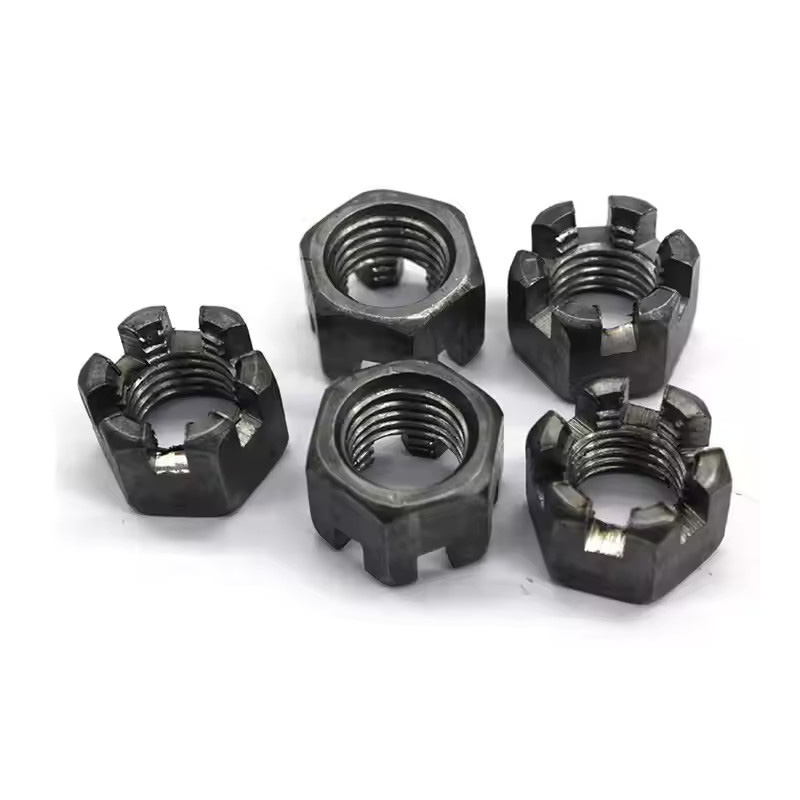
castle nut
Proper Tools for Tightening Castle Nuts
To tighten a castle nut effectively, using the right tools is essential. A torque wrench is the most reliable tool for applying the correct amount of force. Torque wrenches are calibrated to ensure that the nut is tightened to the precise torque specification, which prevents damage from improper tightening.
In addition to a torque wrench, it’s important to have the appropriate sockets and extensions to reach the nut without overextending the tool. If you’re working in confined spaces, make sure to use a low-profile socket to avoid damaging the nut or surrounding components.
The Role of Cotter Pins in Securing Castle Nuts
Once a castle nut is tightened to the specified torque, it must be secured with a cotter pin. The cotter pin fits into one of the slots on the nut and is bent over the bolt to prevent the nut from rotating. This is essential for ensuring that the nut stays in place, especially in high-vibration environments.
It’s important to ensure that the cotter pin is installed correctly: it should pass through the bolt hole and be bent securely against the castle nut. A loose or improperly bent cotter pin can fail to prevent the nut from loosening, potentially leading to equipment failure.
Tips for Tightening Castle Nuts in Various Applications
While the torque specifications for castle nuts generally fall within a similar range, the specifics can vary depending on the application. For example, in automotive and machinery applications, castle nuts are often used to secure parts that experience vibration, so they must be tightened firmly to prevent loosening.
However, in sensitive applications such as aerospace or medical equipment, torque should be controlled more precisely to avoid overstressing components. Always check the manufacturer’s recommendations for the exact torque requirements based on the material and size of the castle nut and the parts being secured.
Common Mistakes to Avoid When Tightening Castle Nuts
When tightening castle nuts, there are a few common mistakes that should be avoided:
- Over-tightening: Applying excessive torque can strip the threads or even break the bolt. Always follow the manufacturer’s torque specifications.
- Under-tightening: This can cause the nut to come loose over time, particularly in high-vibration applications. Use a torque wrench to achieve the correct tension.
- Ignoring Cotter Pin Installation: Not securing the nut with a cotter pin is a serious mistake. A properly installed cotter pin prevents the nut from loosening under stress.
By avoiding these mistakes and following the proper torque references, you can ensure the long-term performance and safety of your assembly.
Why Choose Xinchi for Your Castle Nut and Fastener Needs?
Xinchi Fasteners, established in 2007, is a leading manufacturer of high-quality fasteners, including castle nuts and related components. With 102 cold heading machines and a daily production capacity of over 10 million pieces, we ensure that our products meet the highest standards of quality and reliability.

Xinchi Fastener Factory
Our new factory, spanning 30,000 square meters and with two six-story buildings, is fully equipped to handle large-scale production and customization of fasteners for a variety of applications, including automotive, machinery, and aerospace. As a trusted fastener supplier, we offer a wide range of high-quality fasteners, including nuts, screws, bolts, rivets, and washers.
By partnering with Xinchi, you benefit from:
- High-quality castle nuts and other fasteners designed for long-lasting performance
- A reliable supply chain with a daily production output that exceeds 10 million units
- Customization options for different materials and sizes
- Strict quality control processes that ensure every product meets international standards
Choose Xinchi for reliable, durable fasteners that you can count on for all your mechanical assembly needs.
Recent Comments