

Flange Nut vs Hex Nut: Key Differences Explained
When sourcing fasteners for industrial or construction use, buyers often compare flange nuts vs hex nuts to determine which option better suits their application. At first glance, both are standard threaded fasteners designed to secure bolts. However, their structural differences directly affect load distribution, vibration resistance, installation efficiency, and long-term reliability.
As a professional fastener manufacturer, Xinchi is glad to introduce the differences between flange nuts and hex nuts, as they are especially important for OEM manufacturers, machinery producers, and structural assembly projects where fastening performance impacts product safety and durability.
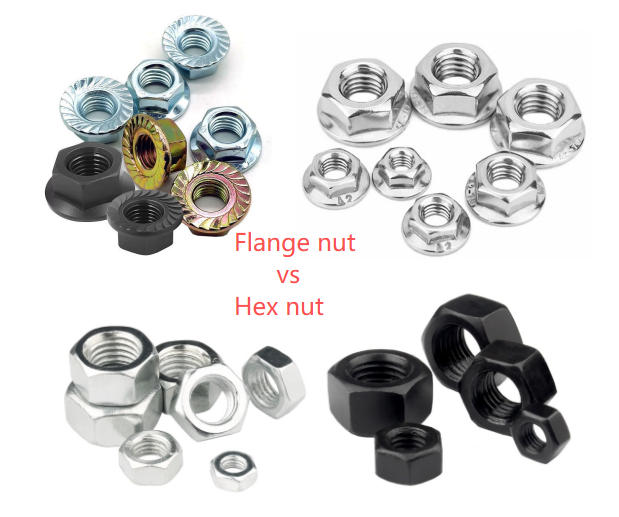
flange nut vs hex nut
Flange Nut vs Hex Nut: Structural Design Differences
The most visible difference between a flange nut and a hex nut lies in their base designs. A flange nut features an integrated circular flange at its bottom, which acts like a built-in washer. This flange increases the bearing surface area and helps distribute clamping force more evenly across the connected material.
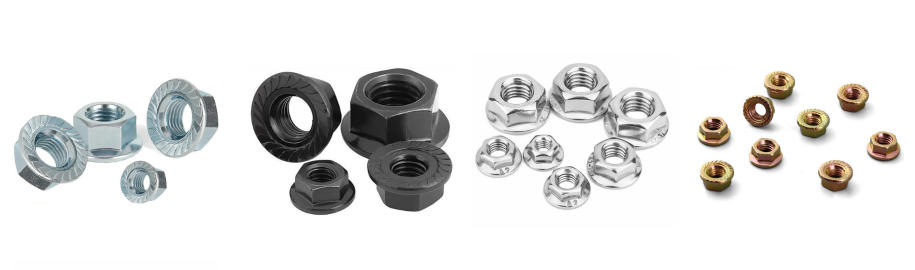
Flange nuts
A standard hex nut, by contrast, has a simple six-sided shape without any extended base. If load distribution or surface protection is required, a separate flat washer must be added during assembly.
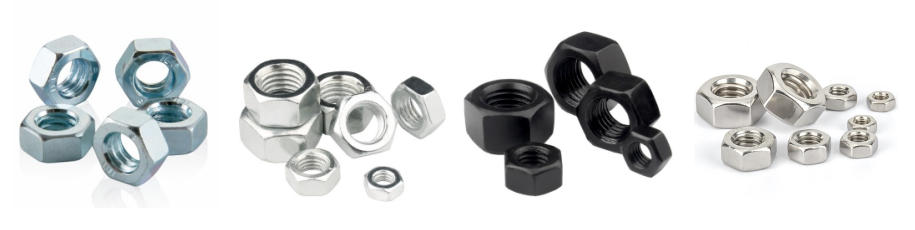
Hex nuts
In practical terms, the integrated design of a flange nut reduces assembly steps and minimizes the risk of missing components, while a hex nut offers a more traditional and flexible fastening solution when combined with washers or locking elements.
Flange Nut vs Hex Nut: Load Distribution and Surface Protection
Load distribution is one of the most important performance factors when evaluating a flange nut vs hex nut.
Because the flange nut has a wider contact surface, it spreads pressure more evenly over softer materials such as aluminum, thin steel plates, or coated surfaces. This reduces the chance of surface indentation or damage during tightening. In many sheet metal or automotive applications, this built-in flange helps improve joint stability without requiring additional hardware.
A hex nut concentrates clamping force on a smaller surface area unless paired with a washer. While this is not a disadvantage in heavy steel-to-steel connections, it can become a concern when working with thinner or softer materials. In those cases, using a washer becomes necessary to achieve similar load distribution.
Flange Nut vs Hex Nut: Performance Under Vibration
In applications involving vibration—such as automotive assemblies, agricultural equipment, or machinery—fastener stability becomes critical.
In a flange nut vs hex nut comparison under vibration, flange nuts often perform better due to increased surface contact. Some flange nuts also feature serrations on the underside, which enhance grip and reduce loosening. This makes them a practical choice in dynamic environments.
Hex nuts, while reliable, typically require additional anti-loosening solutions such as spring washers, nylon insert lock nuts, or thread-locking compounds when used in vibration-heavy conditions. Therefore, the selection often depends on the overall assembly design and cost considerations.
Flange Nut vs Hex Nut: Application Scenarios
From a purchasing perspective, deciding between a flange nut vs hex nut depends largely on application requirements and assembly efficiency.
Flange nuts are commonly used in:
- Automotive manufacturing
- Equipment frames
- Structural steel connections
- Sheet metal assemblies
Hex nuts remain widely used in:
- General construction
- Machinery maintenance
- Heavy structural fastening
- Standard bolt-and-washer systems
In high-volume production environments, flange nuts can help simplify inventory management by eliminating separate washer components. Meanwhile, hex nuts remain cost-effective and versatile, particularly when customization or different washer types are required.
Choosing the Right Fastener for Your Project
There is no absolute “better” option in the flange nut vs hex nut discussion. The correct choice depends on load requirements, material type, vibration exposure, and assembly efficiency.
If your project requires improved load distribution and reduced assembly steps, a flange nut may offer clear advantages. If flexibility and cost control are priorities, a standard hex nut combined with appropriate washers may be the more practical solution.
For industrial buyers, consistency in quality, thread accuracy, and material strength often matters more than design differences alone. Partnering with a reliable fastener manufacturer ensures a stable supply and dependable performance.
Why Choose Xinchi Fasteners for Flange Nuts and Hex Nuts?
Xinchi Fasteners has been manufacturing industrial fasteners since 2007. Our factory operates 102 cold heading machines with a daily production capacity exceeding 10 million pieces. The newly completed facility covers 30,000 square meters, including two six-story production buildings designed for high-efficiency output.
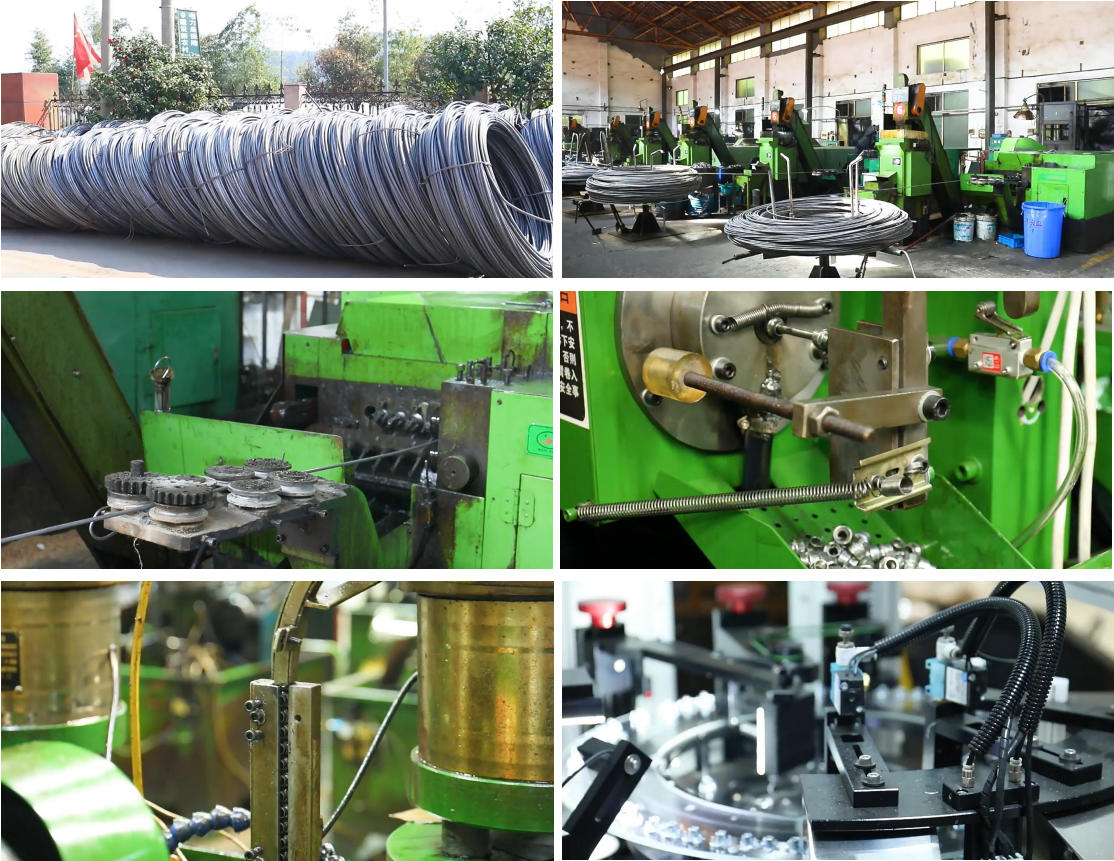
Xinchi Fastener Factory
We specialize in large-scale production of flange nuts, hex nuts, and other standard or custom cold-formed fasteners. As a trusted fastener supplier, we offer a wide range of high-quality fasteners, including nuts, screws, bolts, rivets, and washers. With stable production capacity and strict quality control processes, we support OEM manufacturers, construction suppliers, and international distributors with reliable bulk supply.
If you are evaluating flange nut vs hex nut for your next project, our team can provide technical guidance and competitive quotations based on your specific requirements.
For long-term fastener sourcing, consistency and production strength matter—and that is where Xinchi delivers.