

What’s the Difference Between Flange Bolt and Flange Nut?
If you work with fasteners regularly, you’ve probably seen both flange bolts and flange nuts used in similar places. They both have that wide base that looks like a built-in washer, so it’s easy to assume they do the same job.
But in actual use, they play different roles in a fastening system. As a professional fastener manufacturer, Xinchi is pleased to introduce the difference between a flange bolt and a flange nut, hoping it could help you avoid over-specifying parts or choosing something that doesn’t quite fit your assembly.
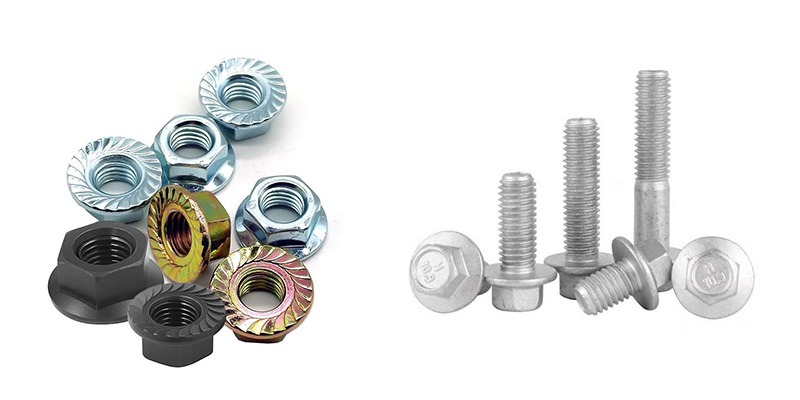
flange nut vs flange bolt
What Is a Flange Bolt in Practical Applications
A flange bolt is basically a bolt with a washer already attached under the head. That flange spreads the load when you tighten it, so the pressure isn’t concentrated in one small area.
In production environments, this saves time. You don’t need to handle separate washers, and there’s less chance of missing parts during assembly. That’s one reason flange bolts are common in automotive lines and equipment assembly.
Another thing people like about flange bolts is that they tend to sit more stably after tightening. The wider contact area helps reduce surface damage, especially on softer materials.

Flange bolts
What Is a Flange Nut and Where Is It Used
A flange nut works similarly, but it’s used on the opposite side of the joint. Instead of being part of the bolt, the flange is built into the nut itself.
In real projects, flange nuts are often paired with standard bolts or studs. This gives more flexibility — you can change the bolt length or grade without changing the nut type.
You’ll also see serrated flange nuts quite often. Those small teeth under the flange help grip the surface and reduce loosening, which is useful in equipment that deals with vibration.
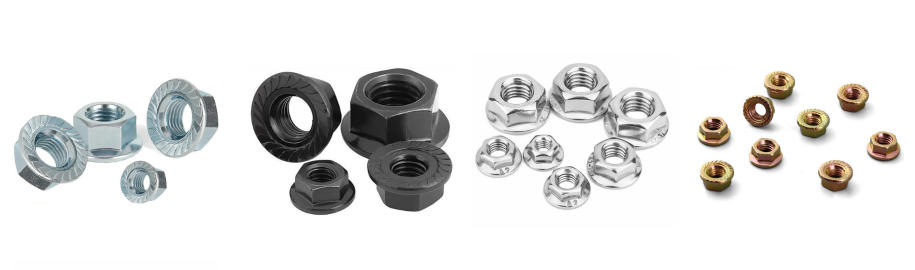
Flange nuts
Flange Bolt vs Flange Nut: The Real Difference
The biggest difference is simple: a flange bolt is a one-piece solution, while a flange nut is part of a two-piece system.
If you’re using a flange bolt, you’re combining the bolt and washer into one part. That usually makes assembly faster and cleaner.
With a flange nut, you still need a bolt or stud, but you gain more flexibility. For example, if a bolt gets damaged, you can replace it without changing the nut.
From a performance point of view, both improve load distribution. But if vibration is a concern, serrated flange nuts usually offer better anti-loosening performance than standard flange bolts.
When to Use Flange Bolts or Flange Nuts
There’s no one-size-fits-all answer — it depends on how your product is assembled.
If you’re running a production line and want to reduce assembly steps, flange bolts are often the better choice. Fewer parts, faster installation, less chance of error.
If your design needs flexibility, or you’re dealing with maintenance and replacements, flange nuts make more sense. You can mix and match them with different bolts as needed.
In high-vibration environments, many engineers prefer serrated flange nuts because they hold more reliably over time.
Xinchi Fastener Factory Advantages
When you’re buying flange bolts or flange nuts in bulk, consistency matters more than anything else. Delays or quality issues can slow down your whole production.
Xinchi has been making fasteners since 2007, focusing on cold heading production. The factory runs 102 cold heading machines, with a daily output of over 10 million pieces, which makes it easier to handle large and stable orders.
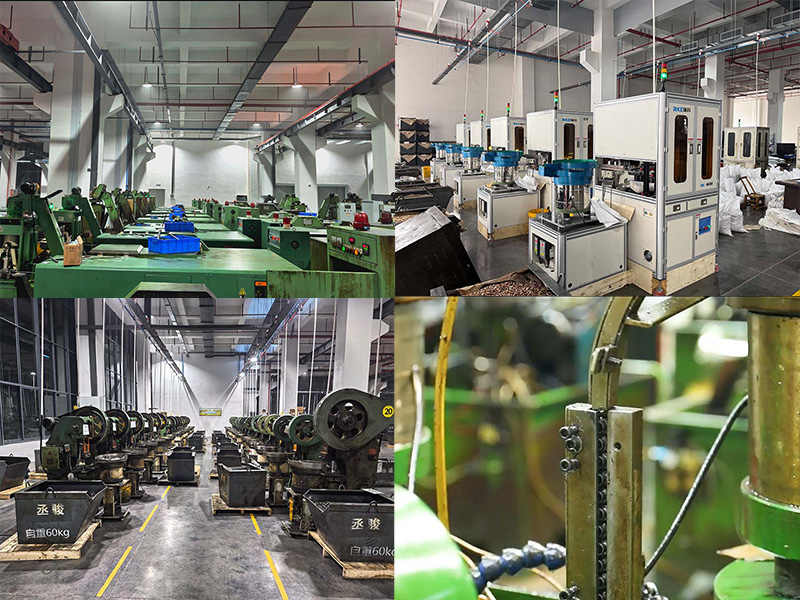
Xinchi Fasteners Factory
The new factory covers about 30,000 square meters, with two six-story buildings already in use. This setup supports both capacity and workflow efficiency.
As a trusted fastener supplier, Xinchi offers a wide range of high-quality fasteners, including nuts, screws, bolts, rivets, and washers. For buyers, this usually means shorter lead times, more stable quality between batches, and better support for long-term supply.