

Different Types of Hex Nuts and Their Uses
Hex nuts are among the most commonly used fasteners in mechanical and structural assemblies. But not all hex nuts are created equal—each type is designed for specific performance needs and environments.
As a professional nut manufacturer, Xinchi is glad to introduce the main types of hex nuts, their typical applications, and how material choices such as carbon steel and stainless steel affect performance.
Standard Hex Nut for General-Purpose Fastening
Standard hex nuts are the most widely used type, featuring a six-sided profile that provides strong wrenching grip and reliable performance. These hex nuts are designed for general-purpose use in a variety of everyday applications.
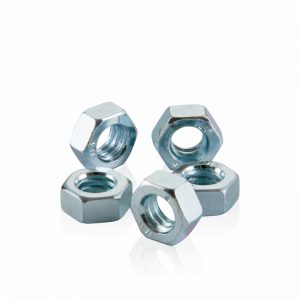
Typical Applications:
Standard hex nuts are commonly used in furniture assembly, home hardware installations, light-duty equipment, and general machinery. They are paired with bolts or threaded rods to form stable, secure joints.
Material Options:
Standard hex nuts are available in carbon steel and stainless steel. Carbon steel hex nuts are cost-effective and strong, often coated with zinc to improve corrosion resistance. Stainless steel hex nuts (such as 304 or 316) provide superior corrosion resistance, making them ideal for damp, outdoor, or chemical environments.
Heavy Hex Nut for High-Load Applications
Heavy hex nuts are larger and thicker than standard hex nuts, offering a broader bearing surface and deeper thread engagement. These heavy hex nuts are designed to handle greater tension and stress.

Typical Applications:
Heavy hex nuts are widely used in structural steel construction, bridge engineering, wind turbines, mining equipment, and other heavy machinery applications.
Material Comparison:
Carbon steel heavy hex nuts (such as Grade 8 or Grade 10) deliver high tensile strength and are commonly used in structural or industrial environments. Stainless steel heavy hex nuts—especially in 316 grade—are chosen for their corrosion resistance in harsh or marine conditions.
Flange Hex Nut for Integrated Load Distribution
Flange hex nuts feature a built-in washer-like flange at the base, which helps distribute the load over a larger surface area and prevents damage to soft materials.

Typical Applications:
Flange hex nuts are ideal for automotive assemblies (such as engine mounts and suspension systems), sheet metal joints, and fastening on plastic or wood components where surface protection is important.
Material Options:
Flange hex nuts are available in carbon steel with various surface coatings, such as zinc plating or Dacromet, to resist rust. Stainless steel versions are used in marine, chemical, and food processing environments due to their excellent corrosion resistance.
Locking Hex Nut for Vibration Resistance
Locking hex nuts are specially designed to prevent loosening caused by vibration or dynamic loads. Common types include nylon insert hex lock nuts, all-metal prevailing torque lock nuts, and distorted thread lock nuts.
Typical Applications:
Locking hex nuts are essential in automotive, aerospace, transportation, and heavy equipment industries. They are often used in safety-critical assemblies or any application where movement could compromise fastening integrity.
Material Options and Types:
Nylon insert locking hex nuts are effective for general applications but are not suitable for high-temperature use. All-metal locking hex nuts are better for high-heat or chemical-exposed environments. Both carbon steel and stainless steel materials are available depending on torque and environmental resistance requirements.
Material Selection for Hex Nuts: Carbon Steel vs Stainless Steel
When selecting hex nuts, the material is just as important as the type. Carbon steel hex nuts are strong, affordable, and widely used in dry, indoor conditions. They often feature zinc plating, black oxide, or phosphate coatings to enhance their corrosion resistance.
Stainless steel hex nuts, such as 304 or 316, offer excellent resistance to corrosion, making them ideal for marine, outdoor, food-grade, and chemical industry applications. While more expensive than carbon steel, stainless steel hex nuts ensure long-term durability and lower maintenance in harsh environments.
Why Choose Xinchi Hex Nuts?
At Xinchi Fasteners, we specialize in the production of a full range of hex nuts, offering consistent quality and flexible customization to meet diverse industrial needs.
- Our factory operates 102 cold heading machines with a daily production capacity of over 10 million pieces.
- We provide standard and heavy hex nuts, flange nuts, lock nuts, and custom designs in both carbon steel and stainless steel, with a variety of surface finishes.
- All products are manufactured under strict quality control and conform to DIN, ANSI, and ISO standards.
- We support bulk orders, OEM customization, and fast global delivery for industrial buyers.
XINCHI is a trustworthy fastener company, especially in furniture nuts. We have a factory, founded in 2007. We are the designated fastener supplier to“STAPLE”. As a trusted fastener supplier, XINCHI offers a wide range of high-quality fasteners, including nuts, screws, bolts, rivets, and washers.
Need help selecting the right hex nut for your application? Contact our team for technical support, samples, or custom production solutions tailored to your project.