

How to Choose the Right Wing Nut for Your Project
Choosing the right wing nut is not just about convenience. Thread compatibility, material selection, and surface treatment all play a role in how well the fastener performs in real use. A well-chosen wing nut improves installation efficiency and helps maintain a secure connection over time.
As a professional wing nut supplier, Xinchi is pleased to provide consideration for choosing the right wing nut.
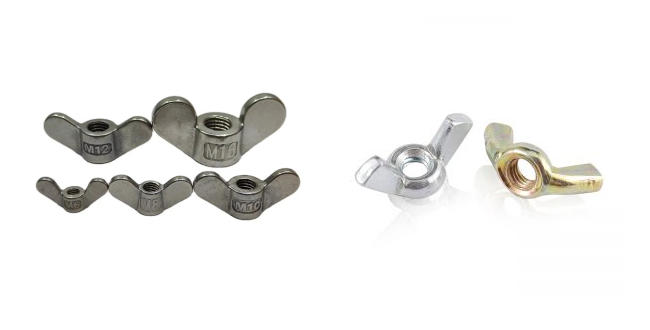
Choosing the Right Wing Nut Size Based on Thread Compatibility
When considering how to choose a wing nut, thread size should always come first. A wing nut must match the bolt or threaded rod exactly to tighten smoothly by hand and provide reliable holding strength.
Common wing nut sizes include M3, M4, M5, M6, M8, and M10, with M6 and M8 widely used in furniture, fixtures, and light mechanical assemblies. An incorrect thread size may result in poor engagement, stripped threads, or loosening during use, so checking the bolt specification in advance is essential.
Selecting the Appropriate Wing Nut Material for the Application
The working environment largely determines the best wing nut material. For standard indoor applications, carbon steel wing nuts offer a good balance between strength and cost.
For outdoor use or humid environments, stainless steel wing nuts are a better choice, as they provide strong corrosion resistance without relying on surface coatings. In some cases, brass or zinc alloy wing nuts are used for lighter loads or decorative purposes where appearance is also a consideration.
Choosing the correct material helps extend the service life of the wing nut and reduces the risk of premature failure.
Evaluating Corrosion Protection and Surface Finish for Wing Nuts
In applications where moisture or exposure is unavoidable, corrosion protection becomes an important factor when selecting a wing nut. Zinc-plated or nickel-plated wing nuts offer basic rust resistance and are commonly used in general industrial and furniture applications.
If long-term durability is required, especially in outdoor conditions, stainless steel wing nuts may be the more reliable option. Assessing whether a protective coating is necessary can help balance performance requirements and cost.
Understanding Strength Requirements When Choosing a Wing Nut
Although wing nuts are designed for hand tightening rather than high torque, strength requirements should not be overlooked. Some applications involve repeated adjustment, vibration, or moderate loads, which may require a higher-strength wing nut.
In such cases, steel wing nuts with controlled mechanical properties are recommended. For light-duty or temporary fastening, standard wing nuts are usually sufficient. Understanding how the wing nut will be used helps avoid unnecessary over-specification.
About Xinchi Fastener – Reliable Wing Nut Manufacturing Support
Xinchi Fastener is a professional fastener manufacturer with strong production capacity and stable supply capability. The factory operates 102 cold heading machines, with a daily output exceeding 10 million pieces, ensuring consistent delivery for both small and large orders.

The company’s new manufacturing base covers 30,000 square meters, consisting of two six-story production buildings, designed to support efficient production, quality control, and future expansion.
As a trusted fastener supplier, Xinchi offers a wide range of high-quality fasteners, including nuts, screws, bolts, rivets, and washers. Xinchi ensures efficient manufacturing, reliable supply, and fast delivery. Combined with strict quality control and professional service, we offer dependable bolt solutions for global customers. With mature manufacturing experience and flexible customization capabilities, Xinchi Fastener supports global customers with reliable wing nut solutions for a wide range of applications.