

Why 3-Hole Round Base T Nuts Fail After Installation
3-hole round base T nuts are widely used in furniture assembly and wooden structures because they provide a strong threaded anchor and better load distribution than standard T nuts. However, in real applications, performance issues are often not caused by the product itself, but by installation mistakes or unsuitable materials.
As a professional T-Nut manufacturer, Xinchi is glad to introduce the most common problems found in 3-hole round base T-nut installation.
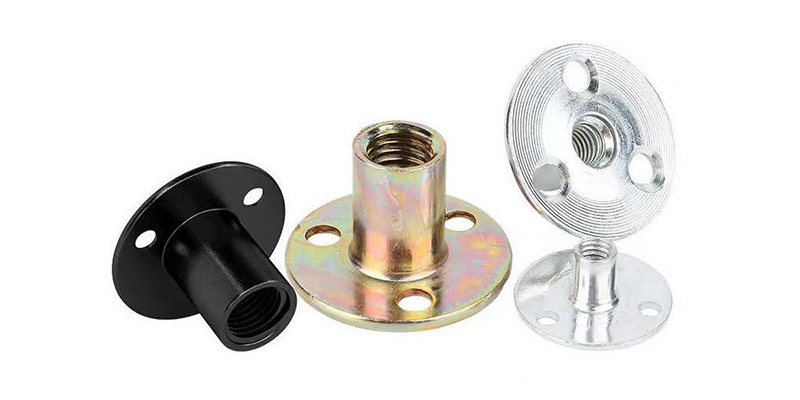
3-hole round base T nut
Hole Misalignment and Uneven Load in 3-Hole Round Base T Nuts
One of the most common issues during installation is inaccurate drilling. When the three mounting holes do not match the base position properly, the 3-hole round base T nuts cannot sit flat against the surface.
This creates uneven pressure when the bolt is tightened. One side of the base carries more load than the others, which affects stability over time. In the beginning, the connection may still feel firm, but repeated use or vibration can gradually lead to loosening.
Accurate drilling and correct positioning are essential to ensure stable performance of 3-hole round base T nuts.
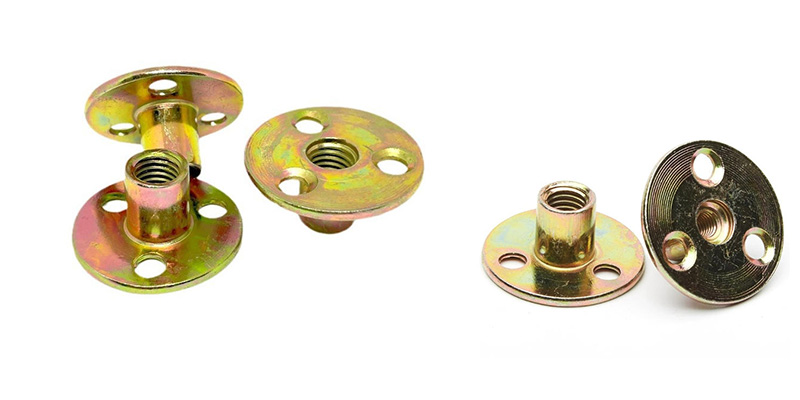
3-hole round base T nut
Incorrect Screw Length Issues with 3-Hole Round Base T Nuts
Another frequent mistake is using the wrong screw length. With 3-hole round base T nuts, the bolt needs proper thread engagement while still matching the thickness of the board.
If the screw is too short, the internal thread is not fully engaged, resulting in weak clamping force. If it is too long, it may bottom out or put unnecessary pressure on the board, which can cause cracking in softer wood materials.
Choosing the correct screw length based on material thickness is critical for the performance of 3-hole round base T nuts.
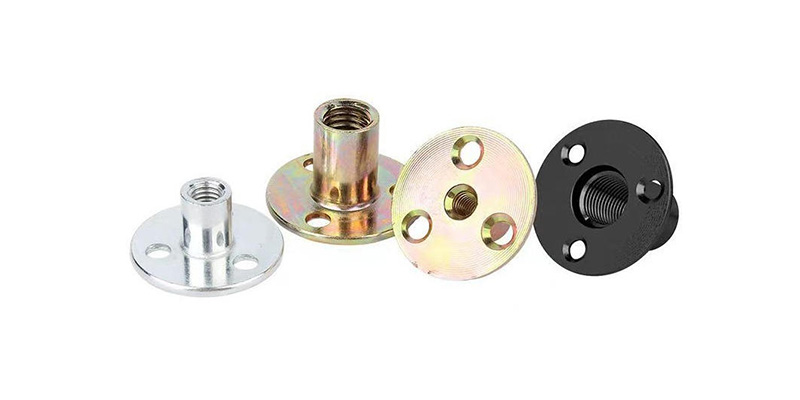
3-hole round base T nut
Weak Board Material Problems in 3-Hole Round Base T Nuts Installation
Even when installation is correct, the base material plays a major role. Thin panels or low-density boards do not provide enough holding strength for 3-hole round base T nuts.
Under load or repeated movement, the nut may slowly rotate or loosen inside the material. This issue is especially common in furniture that is frequently assembled or adjusted.
For better stability, 3-hole round base T nuts should be used with solid wood or engineered boards that have sufficient thickness and density.
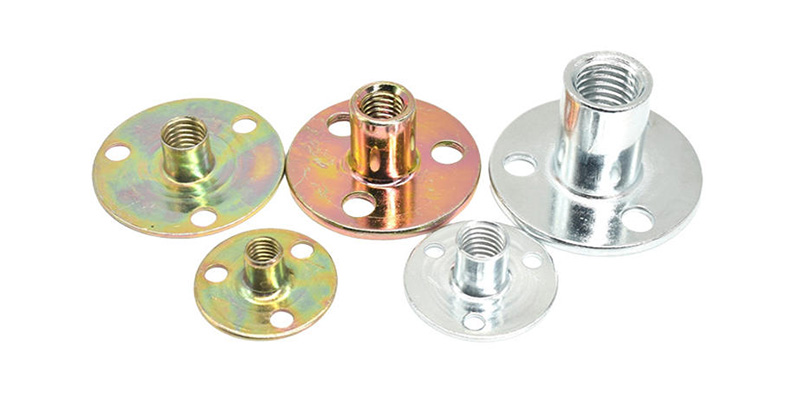
3-hole round base T nut
Installation Quality vs Manufacturing Quality of 3-Hole Round Base T Nuts
In practice, many performance issues come from a combination of installation conditions and product quality. Even small differences in thread precision, base flatness, or dimensional consistency can affect the final result.
A well-made 3-hole round base T nut ensures smoother installation, better thread engagement, and more stable long-term performance. That’s why consistent manufacturing quality is just as important as correct installation.
How Xinchi Fastener Factory Ensures Stable 3-Hole Round Base T Nuts Quality
Even with proper installation, the quality of 3-hole round-base T-nuts determines long-term reliability. Stable production and consistent control help reduce assembly issues and improve overall performance in real applications.
Xinchi Fastener Factory was established in 2007 and specializes in manufacturing various types of fasteners, including T nuts and related hardware products. The factory is equipped with 102 cold heading machines, with a daily production capacity of over 10 million pieces, ensuring stable supply for large-scale orders. Its new production base covers around 30,000 square meters, including two modern six-story production buildings designed for efficient manufacturing and storage.
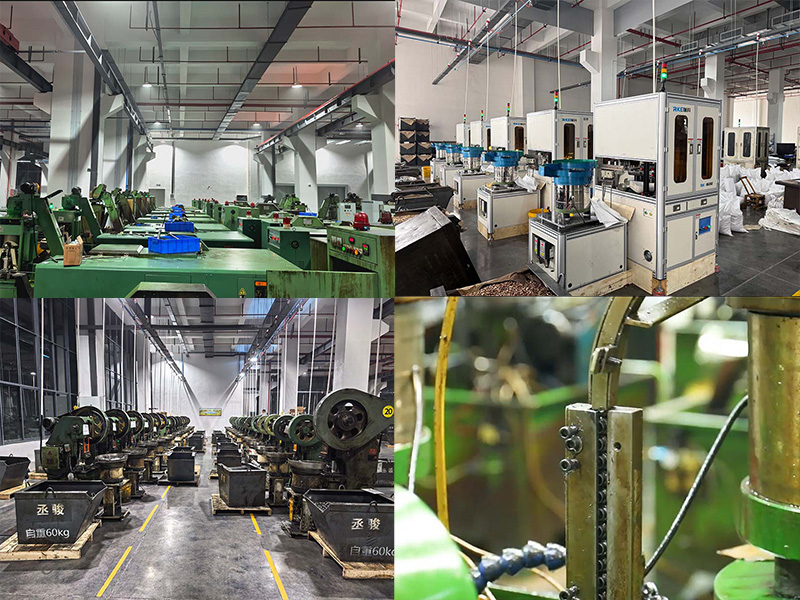
Xinchi Fastener Factory
With years of experience in fastener production, Xinchi provides 3-hole round-base T-nuts and other fasteners, including DIN 1624 T-nuts, Hopper feed T-nuts, screws, and bolts for furniture, woodworking, and industrial applications, meeting both standard and OEM requirements.