

How to Use Prong Tee Nuts
Prong tee nuts are versatile fasteners commonly used in woodworking and furniture making. They provide a strong and reliable method for joining materials, especially when creating threaded holes in softwood, particleboard, or plywood.
As a professional T nut supplier, XINCHI will gladly share the process of using prong tee nuts effectively.
What Are Prong Tee Nuts?
Prong tee nuts, also known as insert nuts or tee nuts, are metal fasteners with prongs that grip into the material they are inserted into. They consist of a cylindrical body with internal threads and several sharp prongs that extend from the base. These prongs help anchor the tee nut securely in place, preventing it from rotating or pulling out when a screw is installed.
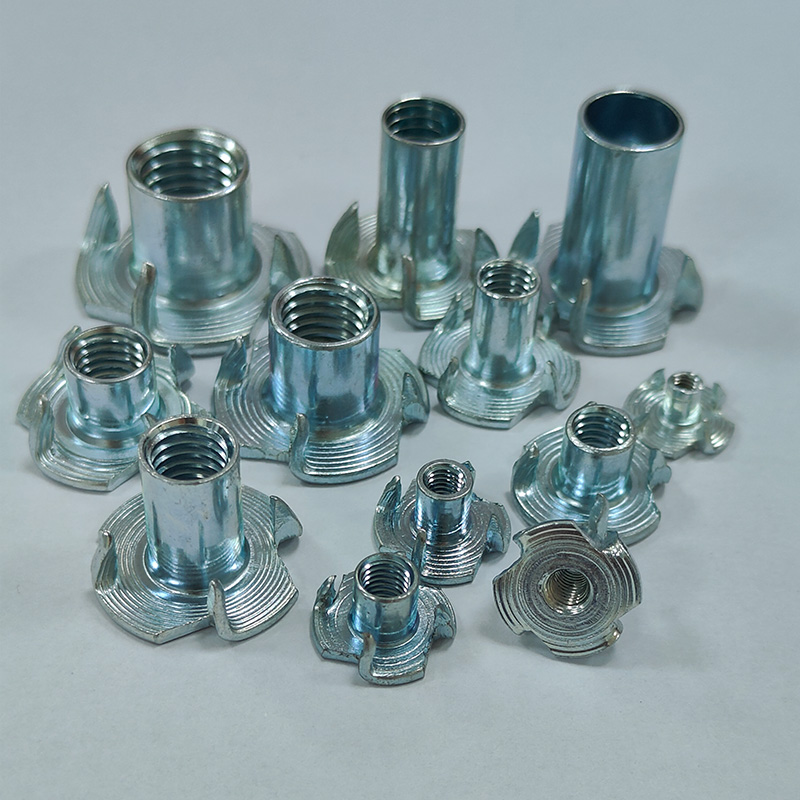
t-nuts
Tools and Materials Needed for Using Prong Tee Nuts
Before you start using prong tee nuts, gather the following tools and materials:
– Prong tee nuts (appropriate size for your project)
– Drill with a drill bit (matching the diameter of the tee nut’s body)
– Hammer
– Screwdriver
– Wood or material for installation
– Clamps (optional)
Step-by-Step Guide to Using Prong Tee Nuts
Step 1: Choose the Right Size
Select a prong tee nut that fits the screw size you plan to use. Common sizes range from #6 to #10 screws. Ensure the tee nut’s body diameter matches the drill bit size you will use for installation.
Step 2: Prepare the Material
Choose the location where you want to install the prong tee nut. Ensure the surface is clean and free of debris. If you are working with a thicker material, consider drilling a pilot hole to make the installation easier.
Step 3: Drill the Hole
Using the drill and the appropriate drill bit, create a hole in the material where you want to insert the tee nut. The hole should be slightly larger than the outer diameter of the tee nut’s body but smaller than the prongs.
Step 4: Insert the Tee Nut
Align the tee nut with the drilled hole and gently push it into place. Ensure that the prongs are facing downward and will embed into the material when hammered.
Step 5: Secure the Tee Nut
Using a hammer, gently tap the tee nut until the prongs penetrate the material and the body of the tee nut is flush with the surface. Be careful not to use excessive force, as this could damage the material.
Step 6: Tighten the Screw
Once the tee nut is securely in place, you can insert a screw into the threaded hole. Use a screwdriver to tighten the screw, which will create a strong connection. The prong tee nut will hold the screw firmly, providing stability to your project.
Tips for Using Prong Tee Nuts
Choose the Right Material: Prong tee nuts work best with softer materials. Avoid using them in hardwoods, as the prongs may not grip securely.
Pre-Drill for Accuracy: Pre-drilling a pilot hole can help ensure your tee nut is inserted straight if you’re uncertain about the alignment.
Test Fit Before Final Installation: If you’re working on a visible surface, consider doing a test fit with a scrap piece to ensure the tee nut will sit flush and look good.
Prong tee nuts are a practical solution for creating strong, threaded connections in various materials. By following the steps outlined above, you can effectively use prong tee nuts in your woodworking projects. With the right tools and techniques, you’ll be able to enhance the durability and functionality of your creations.
XINCHI is a trustworthy fastener company, especially in furniture nuts. We have a factory, founded in 2007. And we are the designated fastener supplier to“STAPLE”. As a trusted fastener supplier, Xinchi can offer a wide range of high-quality fasteners, including nuts, screws, bolts, rivets, washers, etc. If you want to know more about fasteners or want to wholesale fasteners, please feel free to contact us. And then our experienced and expert service team will reply to you as soon as possible.