

Automotive Applications of Button Head Hex Socket Screws
In automotive assembly, not every fastening point offers enough room to work. As layouts get tighter—especially in engine bays, seat structures, and EV components—the choice of fastener becomes more practical than theoretical. This is where button head hex socket screws come in. They’re not the strongest option on paper, but in many real-world scenarios, they’re the ones that actually fit and get the job done. As a professional fastener manufacturer, Xinchi Fastener Factory is glad to introduce the reason.
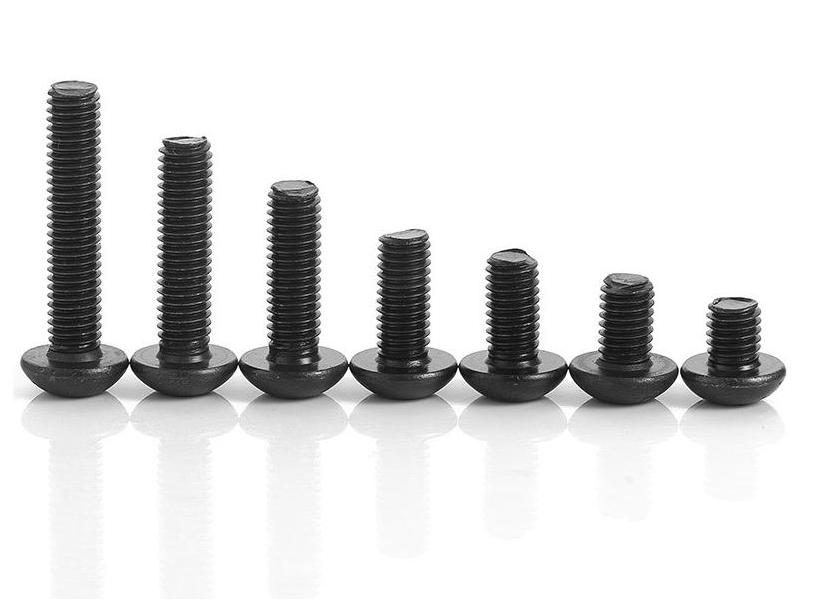
Button Head Hex Socket Screw
Why Button Head Hex Socket Screws Work Well in Automotive Applications
When engineers talk about fasteners for vehicles, they’re usually balancing three things: space, strength, and ease of assembly. Button head hex socket screws sit somewhere in the middle of that balance.
The head is lower than a standard socket head cap screw, so it doesn’t stick out as much. That matters more than it sounds—especially when there are cables, housings, or moving parts nearby. At the same time, the internal hex drive makes it easier to apply torque without needing extra side clearance, which is often limited in automotive assemblies.
In short, they’re not used everywhere—but where space is tight, they make sense.
Button Head Hex Socket Screw
Button Head Hex Socket Screws for Tight Space Automotive Installations
If you’ve ever looked inside an engine compartment or under a dashboard, you’ll notice how little free space there actually is. This is exactly the kind of environment where button head hex socket screws are commonly used.
Because the head is rounded and compact, it reduces the chance of interference with nearby components. More importantly, you don’t need as much swing room for tools compared to external hex bolts. A simple hex key or bit can do the job in a narrow gap.
You’ll often find them in:
- Engine covers and surrounding brackets
- Transmission or gearbox housings
- Interior support structures behind dashboards
- Underbody components where access is limited
In these situations, using a taller or wider-head fastener would either complicate installation or make it impossible.
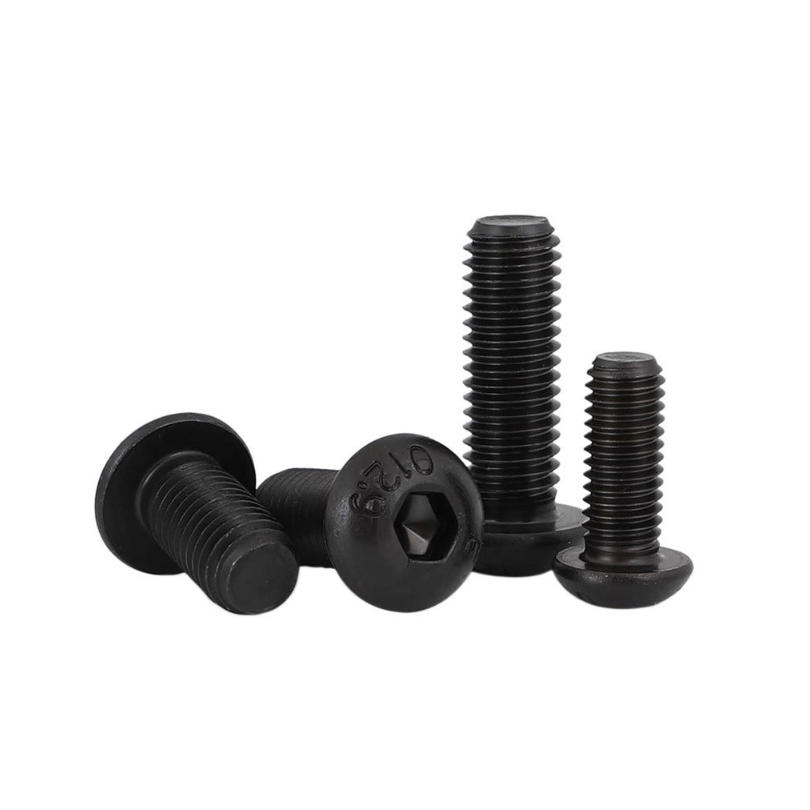
Button Head Hex Socket Screw
Low-Profile Fastening with Button Head Hex Socket Screws in Automotive Design
Low-profile fastening isn’t just about saving space—it also helps avoid problems later on. In vehicles, anything that sticks out too much can rub, catch, or interfere over time.
That’s why button head hex socket screws are often used in areas where surfaces need to stay relatively smooth. Think about parts that people might touch, or areas where wiring runs close to the surface.
Typical use cases include:
- Seat frames and sliding rails
- Interior trim and plastic panel fixing
- Electronic module housings
- Battery packs in electric vehicles
The rounded head reduces the risk of scratching, snagging, or damaging nearby parts. It’s a small detail, but it makes a difference in long-term use.
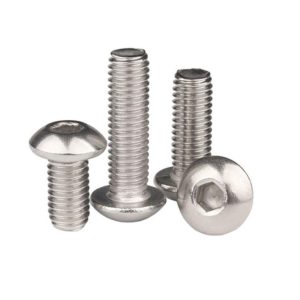
Button Head Hex Socket Screw
Material and Surface Options for Button Head Hex Socket Screws in Automotive Use
In automotive environments, fasteners don’t just hold things together—they deal with vibration, moisture, and temperature changes.
For button head hex socket screws, carbon steel is still the most common choice for general applications. But depending on where they’re used, different surface treatments or materials are needed.
For example:
- Zinc-plated screws are widely used for basic corrosion resistance
- Black oxide is sometimes chosen for appearance or indoor parts
- Coatings like Dacromet or Geomet are more common in exposed or high-corrosion areas
If the screws are used near the exterior or under the vehicle, skipping proper coating usually leads to problems later—this is something many buyers underestimate at the beginning.
Installation Tips for Button Head Hex Socket Screws in Automotive Assembly
Even though button head hex socket screws are easy to handle, there are a few practical points worth paying attention to.
First, they’re not designed for very high clamping force. If the joint requires heavy preload, a socket head cap screw might be a better option. Button heads are more about fit and clearance than maximum strength.
Second, the internal hex can strip if the tool doesn’t match properly or if too much torque is applied. In production lines, torque-controlled tools are usually used to avoid this issue.
In areas with vibration—like engines or suspension parts—it’s also common to add thread locking to prevent loosening over time.
Why Button Head Hex Socket Screws Are Still Widely Used in Automotive Projects
Despite all the different fastener types available, button head hex socket screws continue to show up in automotive designs for a simple reason: they solve a very specific problem.
They help when:
- Space is limited
- A low head profile is needed
- Tool access is restricted
- A clean surface is preferred
They’re not a universal solution, but in the right place, they’re hard to replace.
Xinchi Fasteners: Stable Supply of Button Head Hex Socket Screws
For buyers, especially in automotive or industrial supply chains, consistency matters just as much as product design.
Xinchi Fastener Factory has been focused on fastener manufacturing since 2007. The factory runs 102 cold heading machines, with a daily output of over 10 million pieces. The new production facility covers 30,000 square meters, with two six-story buildings already in operation.
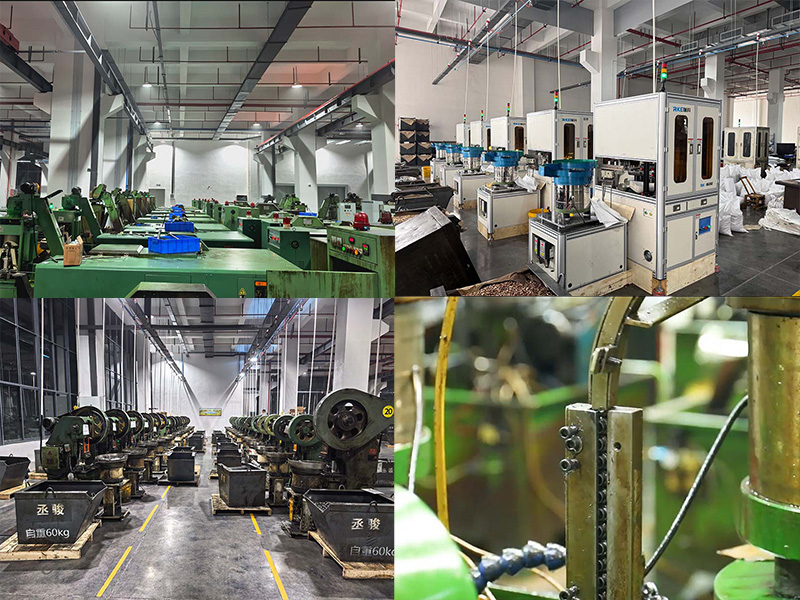
Xinchi Fastener Factory
As a trusted fastener supplier, we can offer a wide range of high-quality fasteners, including nuts, screws, bolts, rivets, and washers. For standard and customized button head hex socket screws, Xinchi can support stable bulk supply and consistent production quality—something that becomes more important as order volumes grow.