

DIN 935 Castle Nut Manufacturing Process Explained
DIN 935 Castle Nut is a widely used slotted locking fastener designed for safety-critical applications such as automotive systems, machinery assemblies, and structural connections. Although its appearance is simple, the manufacturing process involves multiple precise stages that directly determine its strength, durability, and locking performance. As a professional cage nut manufacturer, Xinchi Fastener Factory is happy to introduce for you.
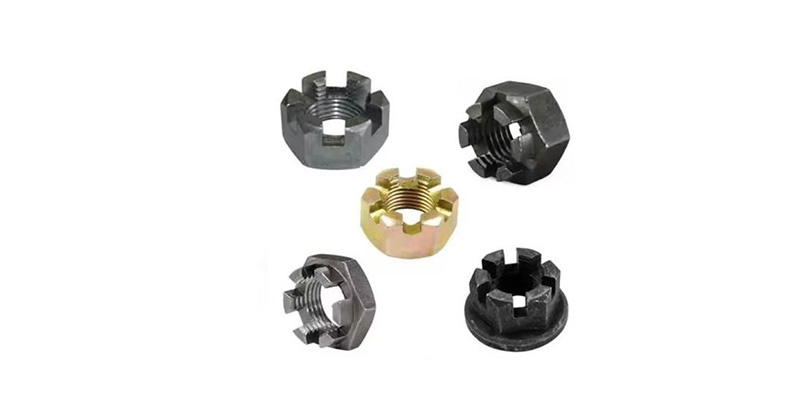
Castle Nut
DIN 935 Castle Nut Cold Forging Process
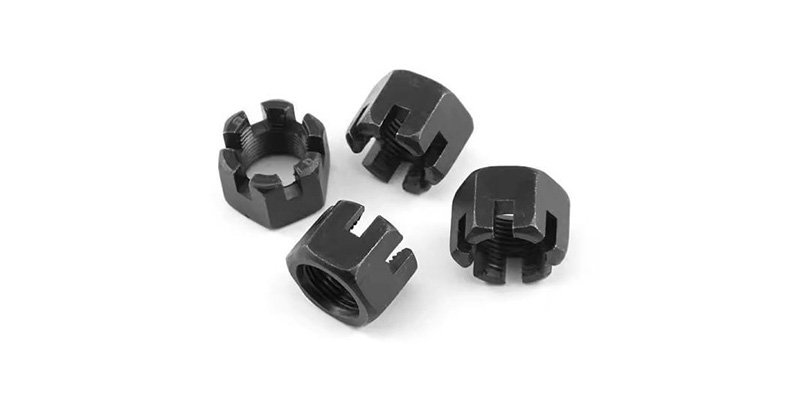
The production of a DIN 935 Castle Nut starts with the cold forging process, which is one of the most important steps for ensuring mechanical strength. Steel wire is first cut into blanks and then formed into a hex shape using multi-station cold heading machines.
During this process, the metal grain flow remains continuous instead of being cut, which significantly improves the strength and impact resistance of the castle nut. Different sizes such as M6, M10, and M20 require different molds and forming parameters to ensure dimensional consistency and stable mass production quality.
Castle Nut
DIN 935 Castle Nut Thread Tapping Process
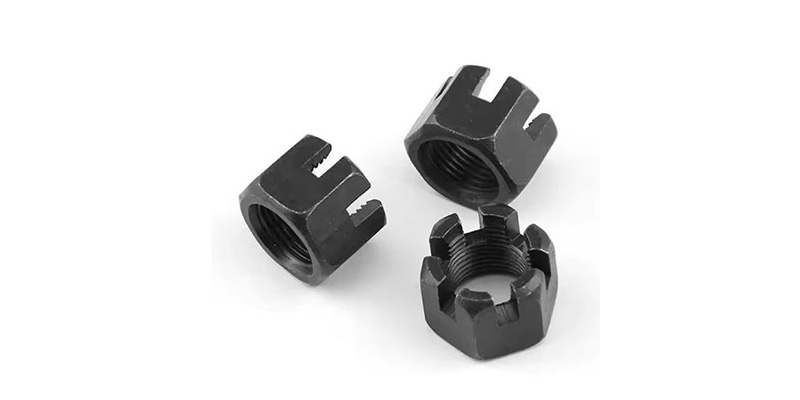
After cold forging, the next step is thread tapping, where internal threads are formed inside the nut body. High-precision tapping machines are used to ensure smooth and accurate thread profiles that match bolts perfectly.
Since DIN 935 Castle Nuts are often used with cotter pins in safety locking systems, thread accuracy is critical. Any deviation in pitch or profile may affect assembly torque and overall locking performance. Therefore, regular inspections are carried out during production to ensure compliance with DIN standards.
Castle Nut
DIN 935 Castle Nut Slot Cutting Process
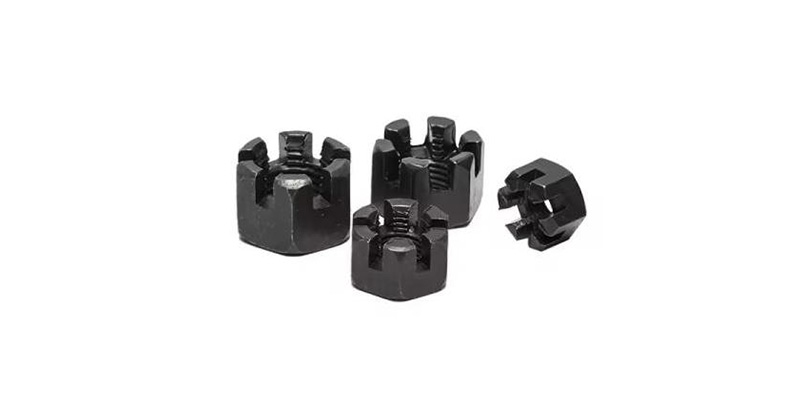
The slot cutting process is the defining feature of DIN 935 Castle Nuts. In this stage, evenly spaced slots are machined on the top of the nut to accommodate a cotter pin for mechanical locking.
The depth, width, and alignment of these slots must be strictly controlled. Any inconsistency may affect the insertion of the cotter pin and compromise the locking function. Specialized milling or stamping equipment is typically used to ensure consistent slot quality across large production batches.
Castle Nut
DIN 935 Castle Nut Surface Treatment Process
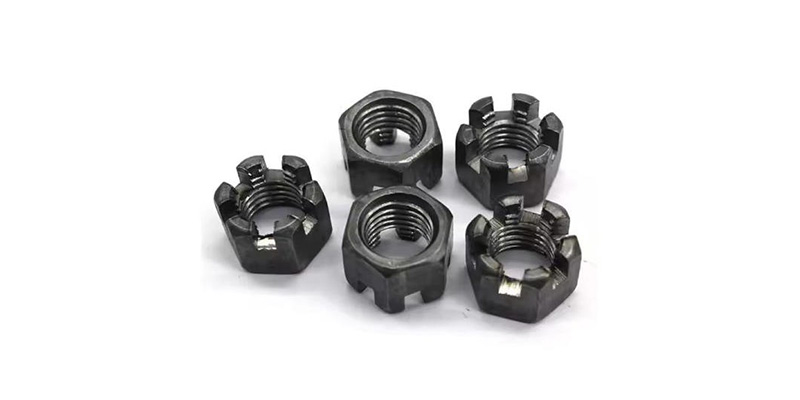
Once the mechanical forming is completed, the castle nut undergoes surface treatment to improve corrosion resistance and service life. Common finishing options include zinc plating, hot-dip galvanizing, and plain anti-rust treatment.
For outdoor or humid environments, thicker zinc coatings are usually applied to enhance corrosion protection. For indoor industrial applications, standard electro-galvanized finishes are often sufficient, balancing cost and performance requirements.
Castle Nut
DIN 935 Castle Nut Quality Inspection and Assembly Control
Before shipment, every batch of DIN 935 Castle Nuts must pass strict quality inspections, including dimensional checks, thread gauge testing, and slot alignment verification.
These inspections ensure proper fit with bolts and cotter pins during real-world assembly. In safety-critical applications such as automotive chassis systems or heavy machinery, even minor deviations can affect structural reliability. Therefore, quality control is integrated throughout the entire production process rather than being limited to final inspection.
DIN 935 Castle Nut Manufacturing Capacity from Xinchi Fastener Factory
In large-scale industrial procurement, manufacturing capacity and delivery stability are just as important as product quality. Xinchi Fastener Factory has established a mature production system for DIN 935 Castle Nuts with strong OEM and export capabilities.
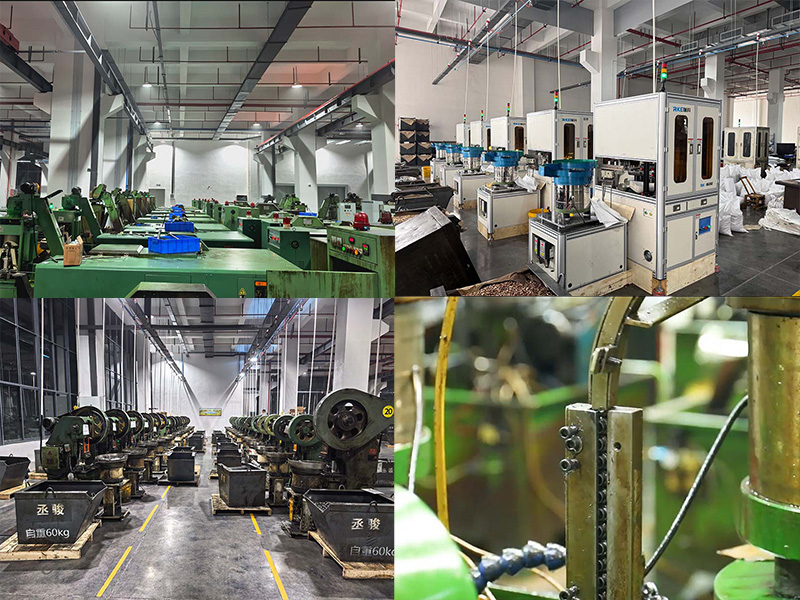
Founded in 2007, the factory operates 102 cold heading machines, enabling a fully integrated production process from raw materials to finished fasteners. The daily output exceeds 10 million pieces, making it suitable for bulk orders and long-term supply requirements.
In addition, the newly built factory covers an area of approximately 30,000 square meters, consisting of two six-story production and storage buildings. This integrated setup provides flexible capacity for OEM and customized orders.
Xinchi Fastener Factory
As a reliable fastener supplier, Xinchi Fastener Factory supplies a wide range of fastening products for industrial applications, including nuts, screws, bolts, rivets, washers, and more, helping customers improve supply stability, production efficiency, and product consistency.