

How Does a Rivet Nut Work?
A rivet nut is a threaded fastener used to add a threaded hole to thin sheet metal, tubing, and other materials. It is a practical option when the material is too thin to tap directly or when the back side of the workpiece is difficult to reach.
So, how does a rivet nut work? At Xinchi, we manufacture rivet nuts for a range of industrial applications. The basic installation process is straightforward: the rivet nut is placed into a pre-drilled hole and then set with a rivet nut tool.
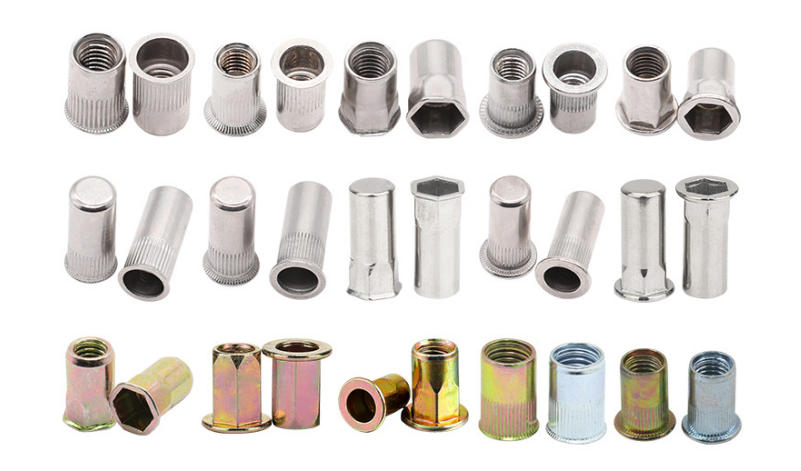
Rivet Nuts
How Is a Rivet Nut Installed?
Installing a rivet nut starts with preparing a hole of the correct size. The hole must match the rivet nut specifications so it can be inserted properly without excessive movement.
The rivet nut is then threaded onto the mandrel of the installation tool and placed into the hole. When the tool is operated, it pulls the threaded part and causes the body of the rivet nut to deform behind the sheet.
Once the rivet nut is set, the tool is removed. The rivet nut stays fixed in the material, providing an internal thread for fastening.
The exact installation method can vary depending on the rivet nut design and the type of tool being used.
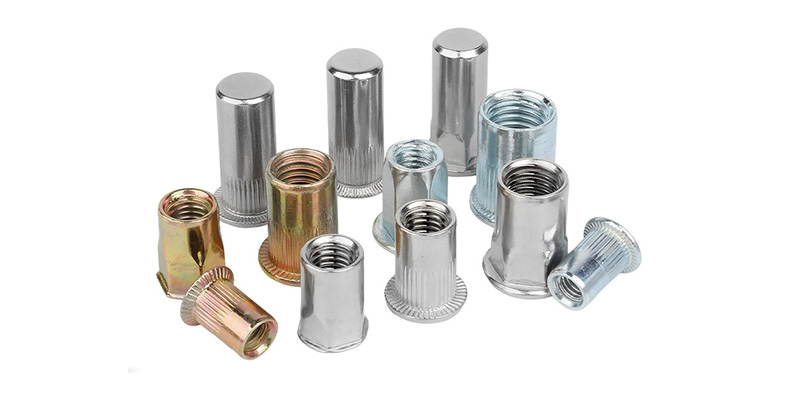
Rivet Nuts
Why Are Rivet Nuts Used in Thin Materials?
A conventional tapped thread may not provide enough material thickness for a secure connection. A rivet nut solves this problem by adding a separate threaded fastener to the material.
Another advantage is one-sided installation. Since the rivet nut can be installed without access to the back of the workpiece, it is useful for enclosed sections, panels, tubes, and other blind applications.
For this reason, rivet nuts are commonly used in sheet metal enclosures, automotive components, machinery, cabinets, electrical equipment, and various industrial products.

Rivet Nuts
What Keeps a Rivet Nut in Place?
The body of a rivet nut is designed to deform during installation. The deformed section forms a grip behind the material, while the head remains against the front surface.
This mechanical grip keeps the rivet nut from moving freely in the hole. Proper hole size, material thickness, rivet nut selection, and installation are all important for a reliable connection.
If the hole is too large or the wrong rivet nut is used for the material thickness, the connection may not perform as expected.
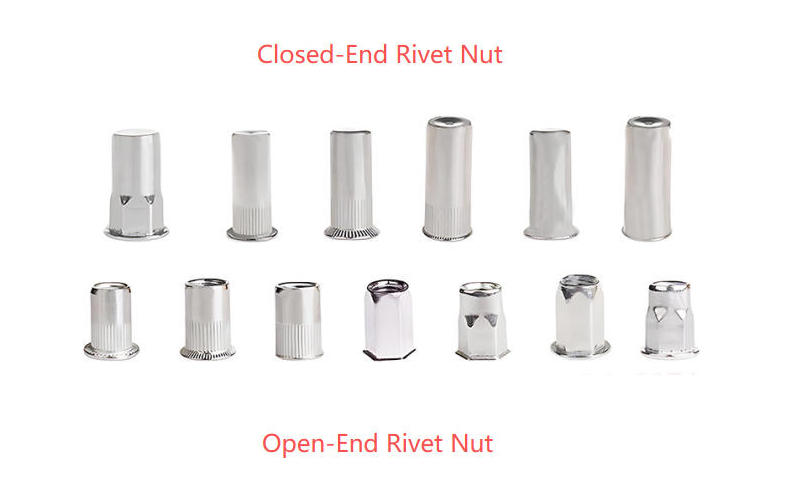
Open End and Closed End Rivet Nuts
Rivet Nut Applications
Rivet nuts are used wherever a threaded fastening point is needed in relatively thin or inaccessible materials.
Typical applications include:
- Sheet metal panels and enclosures
- Automotive and vehicle components
- Machinery and industrial equipment
- Electrical cabinets and equipment
- Metal frames and tubes
- Aluminum and other lightweight structures
They provide a convenient way to add an internal thread without welding a nut or tapping the base material.
About Xinchi Fastener Factory
Xinchi Fastener Factory has been manufacturing fasteners since 2007. The factory has 102 cold heading machines and a daily production capacity of more than 10 million pieces.
A new 30,000-square-meter factory has also been completed, with two six-story buildings for expanded production capacity.
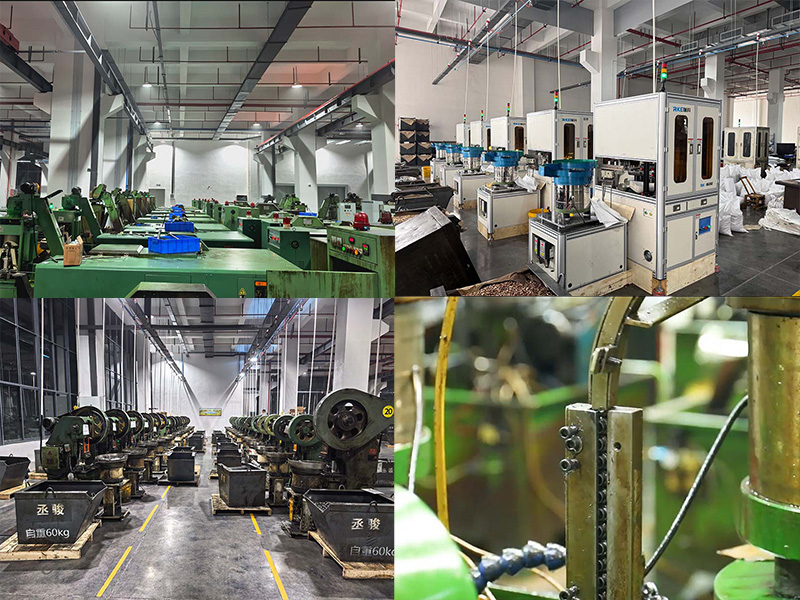
Xinchi Fastener Factory
With its own manufacturing facility and large-scale production capabilities, Xinchi Fastener Factory supplies rivet nuts, DIN1624 T nuts, Hopper Feed T nuts, thread insert nuts, DIN 571 wood screws, bolts, washers, and other fasteners for different industrial applications and customer requirements.