

Manufacturing Process of Hopper Feed T Nuts
Hopper Feed T Nuts are essential components in woodworking and furniture assembly. Their precise design ensures a secure and reliable connection between wooden parts, making them widely used in industrial and DIY applications.
As a professional T-Nut manufacturer, Xinchi is glad to introduce the manufacturing process of Hopper Feed T Nuts, which not only highlights the quality standards but also helps buyers make informed choices.
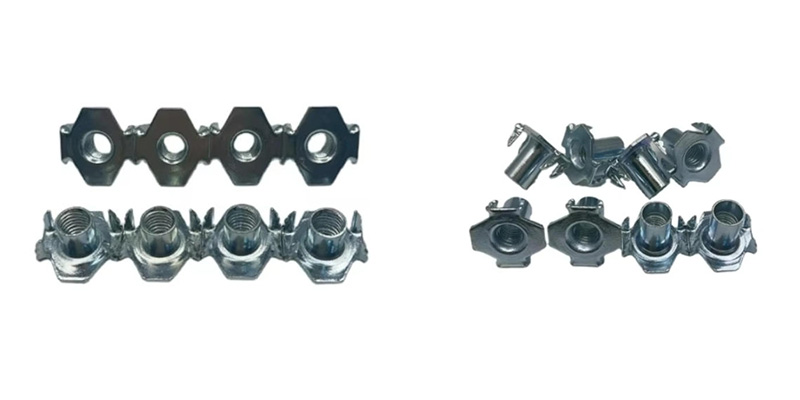
Hopper Feed T Nuts
Raw Materials for Hopper Feed T Nuts
The manufacturing process of Hopper Feed T Nuts starts with high-quality steel wire or rods. Selecting the right material is crucial, as it directly affects the strength, durability, and corrosion resistance of the final product. Typically, carbon steel or alloy steel is used, and the material undergoes strict inspection for tensile strength and surface quality. Using superior raw materials ensures that each T Nut can withstand heavy loads and repeated usage without deformation.
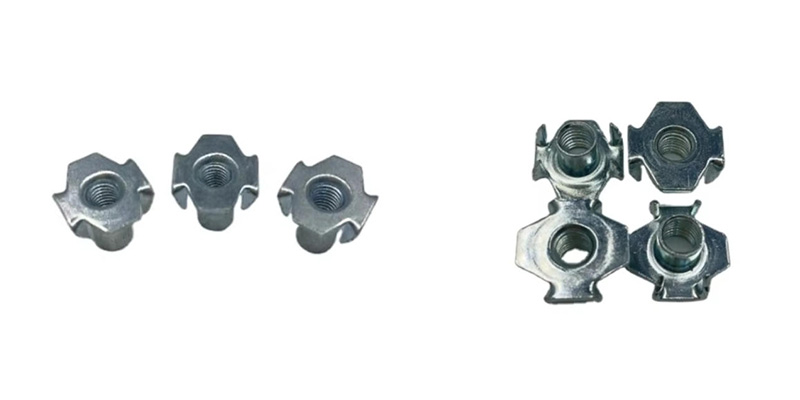
Hopper Feed T Nuts
Cold Heading and Shaping Hopper Feed T Nuts
Once the raw material is prepared, the steel wire is fed into cold heading machines. Cold heading is a highly efficient process where the wire is formed into the basic shape of the T Nut without heating, which helps retain the metal’s strength. Hopper Feed T Nuts often have prongs that need precise shaping to embed securely into wooden surfaces. Modern cold heading machines allow for high-volume production while maintaining consistent shape and dimensions.
Threading Process for Hopper Feed T Nuts
After forming the basic shape, the next step is threading. Threading Hopper Feed T Nuts can be done by rolling or tapping. Thread rolling is preferred for its speed and strength advantages; it produces threads without cutting the metal, resulting in a smoother surface and improved mechanical performance. Properly threaded T Nuts ensure that bolts can be fastened securely, providing a reliable joint in furniture or machinery assembly.
Heat Treatment and Surface Finishing of Hopper Feed T Nuts
To enhance hardness and wear resistance, Hopper Feed T Nuts often undergo heat treatment. This process strengthens the metal, making the nuts more durable under repeated assembly and disassembly. After heat treatment, surface finishing such as zinc plating, black oxide, or nickel coating is applied to improve corrosion resistance and aesthetic appearance. These finishing steps are essential for T Nuts used in both indoor and outdoor applications.
Quality Inspection of Hopper Feed T Nuts
Quality control is critical in the production of Hopper Feed T Nuts. Each batch undergoes dimensional checks, hardness tests, and thread inspections to ensure compliance with international standards. Reliable quality inspection guarantees that the T Nuts perform consistently in woodworking or furniture assembly projects, reducing installation problems and ensuring customer satisfaction.
Advantages of Xinchi Fastener Factory
Xinchi Fastener Factory, established in 2007, has a total of 102 cold heading machines and a daily production capacity exceeding 10 million T Nuts. Our new factory spans 30,000 square meters with two six-story buildings, fully equipped for high-volume production.
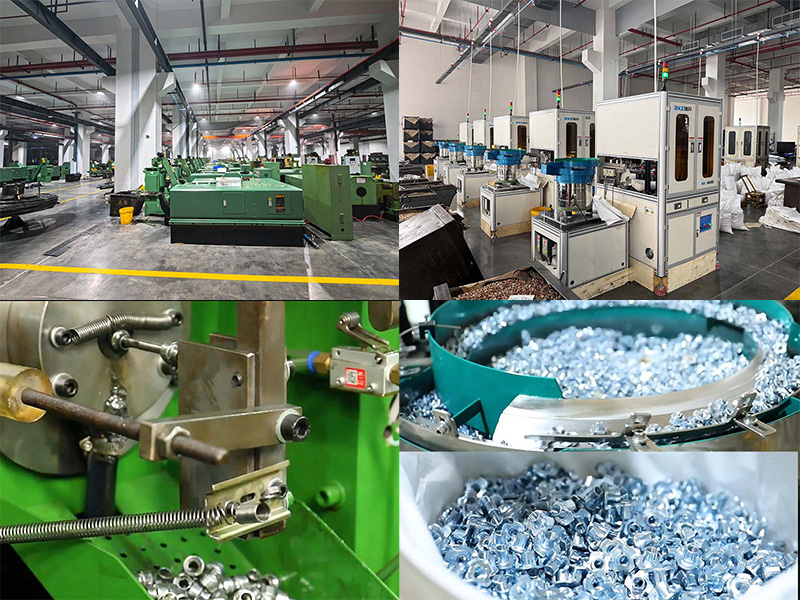
Xinchi Fastener Factory
As a trusted fastener supplier, we can offer a wide range of high-quality fasteners, including nuts, screws, bolts, rivets, and washers. With decades of experience, strict quality control, and advanced machinery, Xinchi ensures that every Hopper Feed T Nut meets high standards of strength, precision, and durability. Partnering with Xinchi guarantees reliable supply and consistent product quality for industrial and commercial clients worldwide.
Recent Comments