

Where Are Hopper Feed T Nuts Used in Furniture Assembly?
Hopper-feed T nuts are commonly used in furniture production where threaded connections need to be installed quickly and repeatedly. Unlike T nuts installed by hand, these T nuts are designed to work with automatic feeding equipment, making them a practical choice for high-volume furniture assembly.
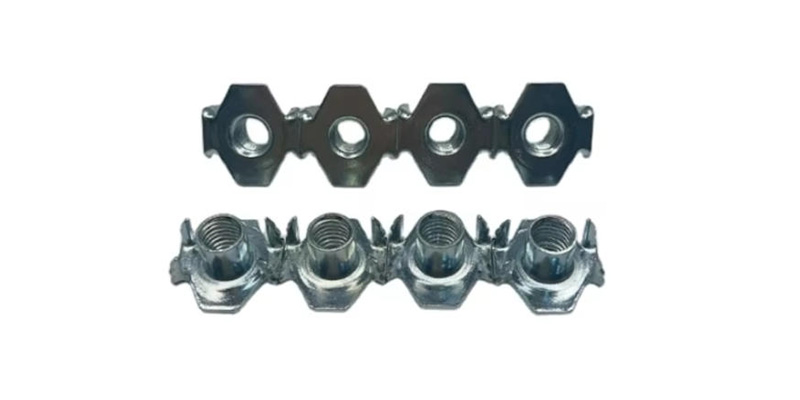
Hopper Feed T Nut
Hopper Feed T Nuts for Beds
Beds often have many connection points between wooden panels, frames, legs, and other parts. A hopper feed T nut provides a threaded hole in the panel for a bolt or screw.
For large-scale bed production, automatic feeding makes it easier to install the same type of T nut at multiple positions without manually placing each nut.
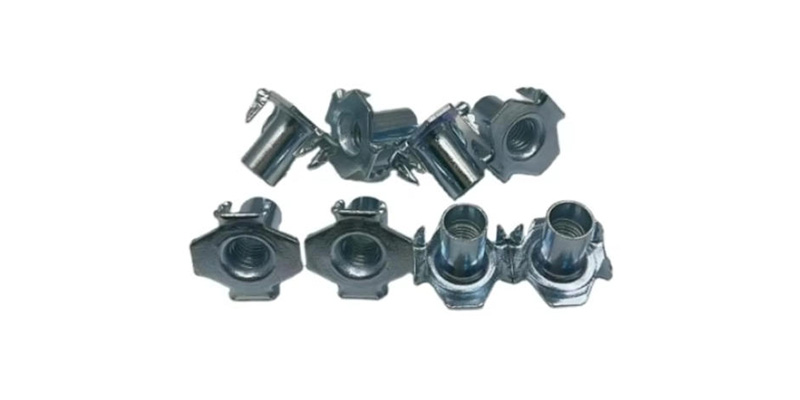
Hopper Feed T Nut
Hopper Feed T Nuts for Sofas
Wooden sofa frames may also require threaded connections for legs, support parts, and detachable components. Machine-fed T nuts can be installed into pre-drilled holes and used with bolts to join different parts of the frame.
This type of connection is also useful when a furniture part needs to be removed and assembled again during transportation or installation.
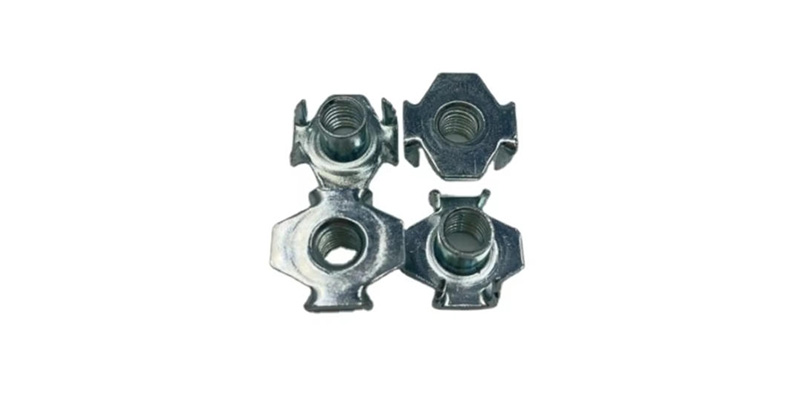
Hopper Feed T Nut
Hopper Feed T Nuts for Office Desks
Office desks usually have repeated fastening points for legs, side panels, brackets, and other components. This makes them a common application for T nuts for furniture.
When the same T nut needs to be installed in large quantities, hopper feeding can reduce manual handling and make the production process faster and more consistent.
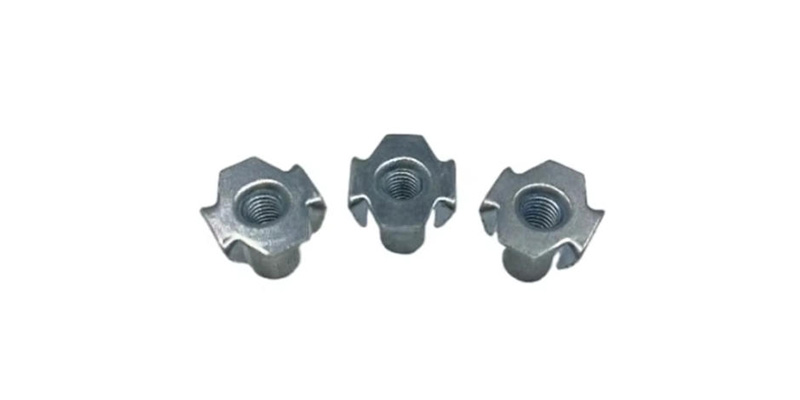
Hopper Feed T Nut
Hopper Feed T Nuts for Cabinets
Cabinets and other panel furniture use many joints between wooden boards. Hopper feed T nuts can be used where a bolted connection is needed instead of a permanent screw connection.
They are particularly useful in production lines where the same panels are assembled in large quantities and the fastening process needs to be repeated efficiently.
Why Use Hopper Feed T Nuts in Furniture?
One advantage of a T nut is that it provides a fixed internal thread in the furniture panel. The fixing prongs help hold the nut in place after installation, while the threaded hole provides a connection point for a bolt.
For furniture that is assembled and disassembled several times, this can be more convenient than relying on a screw directly into the panel. The actual holding strength depends on the T nut size, material, installation method, and the type and thickness of the board.
Hopper Feed T Nuts from Xinchi Fastener Factory
Xinchi Fastener Factory has been manufacturing fasteners since 2007. The factory has 102 cold heading machines and a daily production capacity of more than 10 million pieces.
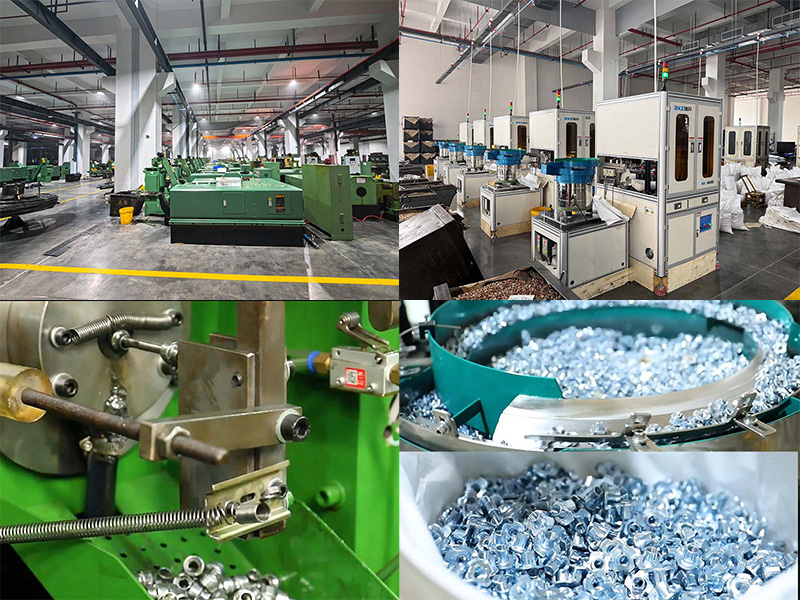
Xinchi Fastener Factory
The new factory covers 30,000 square meters, with two six-story buildings for production and related operations. With its large production capacity, Xinchi supplies hopper feed T nuts, DIN1624 T nuts, rivet nuts, thread insert nuts, DIN 571 wood screws, bolts, washers, and other fastener products for customers with different production requirements.