

Why Use Rivet Nuts for Sheet Metal?
Thin sheet metal can be difficult to tap because there is not always enough material to form a strong thread. In these cases, rivet nuts are a common choice. They provide an internal thread for bolts and screws without the need to weld a nut onto the panel.
A rivet nut for sheet metal can be installed from one side, which is useful when the back of the panel is difficult to reach. It is widely used in metal enclosures, cabinets, appliances, and other sheet metal products.
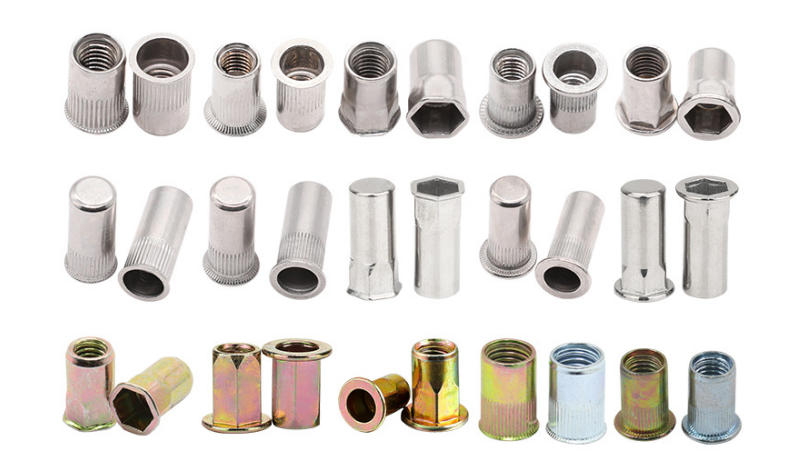
rivet nut
How Rivet Nuts Work in Thin Sheet Metal
A rivet nut is placed into a prepared hole and installed using a rivet nut tool. During installation, the back of the body is compressed and forms a bulge behind the sheet metal. This holds the rivet nut in place and leaves an internal thread for fastening.
Unlike tapping directly into thin metal, this method does not rely on the panel thickness to provide the thread. It is also useful for assemblies that may need to be taken apart for repair or maintenance.

rivet nuts
Common Applications of Sheet Metal Rivet Nuts
Rivet nuts are used in many products made from sheet metal. They are often found in parts where screws or bolts need to connect panels, brackets, or other components.
Some common applications include:
- Electrical enclosures: For attaching covers, mounting brackets, and internal parts.
- Home appliances: For fastening panels and components in ovens, washing machines, and other appliances.
- Automotive parts: For connecting metal panels, interior parts, and brackets.
- Metal cabinets and racks: For mounting accessories and joining sheet metal parts.
- HVAC equipment: For fastening housings, panels, and ductwork components.
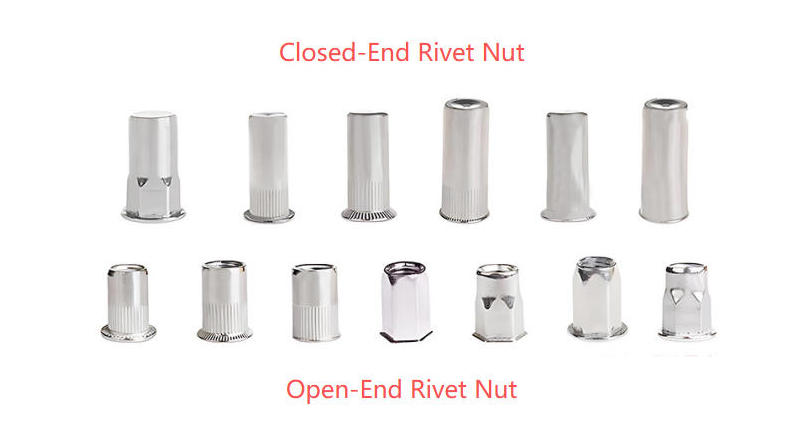
Closed-end & open-end rivet nuts
What to Check When Choosing a Rivet Nut for Sheet Metal
Before ordering rivet nuts, it is important to check the sheet thickness and the dimensions of the installation hole. These details affect whether the rivet nut can be installed properly.
- Grip range: Choose a rivet nut that matches the thickness of the sheet metal.
- Thread size: Check whether you need a metric or inch thread and make sure it matches the bolt or screw.
- Body type: Round, knurled, and hex body rivet nuts are available. The right choice depends on the hole design and the required resistance to rotation.
- Material: Steel, stainless steel, and aluminum are common options. Consider the working environment and corrosion requirements.
- Hole size: Follow the recommended hole diameter. A hole that is too large may cause the rivet nut to spin, while a hole that is too small can make installation difficult.
If you are selecting a rivet nut for a new project, checking the drawing and actual sheet thickness before ordering can help avoid fitting problems.
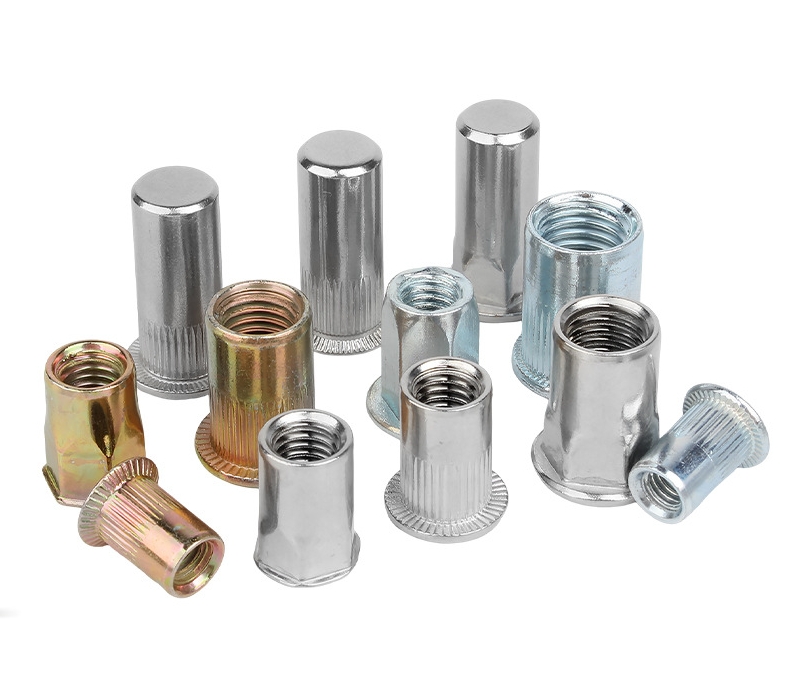
rivet nuts
Xinchi Fastener Factory
Xinchi Fastener Factory was established in 2007. Our factory has 102 cold heading machines, with a daily production capacity of more than 10 million pieces.
The new factory covers 30,000 square meters and consists of two six-story buildings. We manufacture various industrial fasteners for customers in different markets.
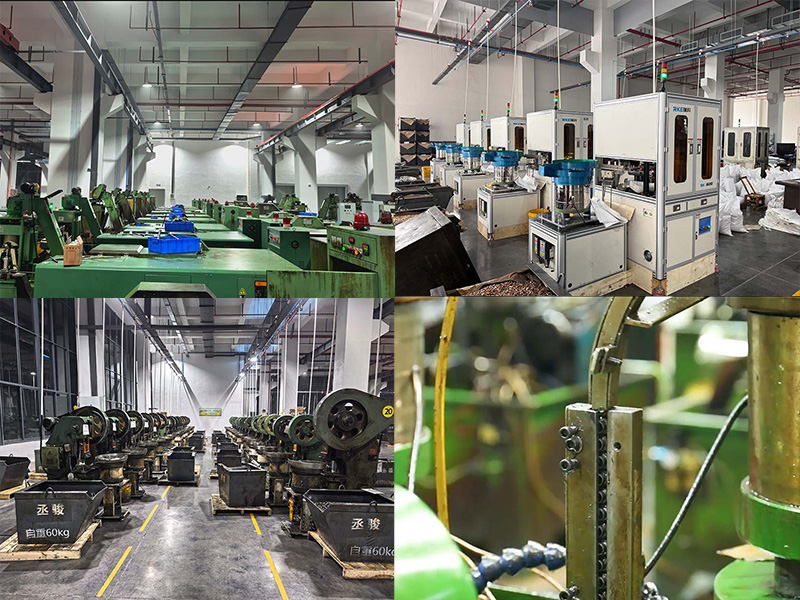
Xinchi Fastener Factory
In addition to rivet nuts, we supply DIN 1624 T nuts, Hopper Feed T Nuts, threaded insert nuts, square weld nuts, hex weld nuts, and other fasteners. If you are sourcing rivet nuts or other fasteners for sheet metal applications, you are welcome to contact Xinchi Fastener with your drawings or product requirements.
Recent Comments