

How to Prevent Wood Splitting When Installing 4-Prong T Nuts
Four-prong T nuts are commonly used in furniture, wooden structures, and DIY projects to create a strong threaded connection in wood panels. However, during installation, some users may face problems such as wood cracking or splitting, especially when working with thin boards or soft materials.
Proper installation methods and selecting the right 4-prong T-nut can help avoid these problems and ensure a reliable connection. As a professional T-nut manufacturer, Xinchi Fastener Factory is happy to share with you.
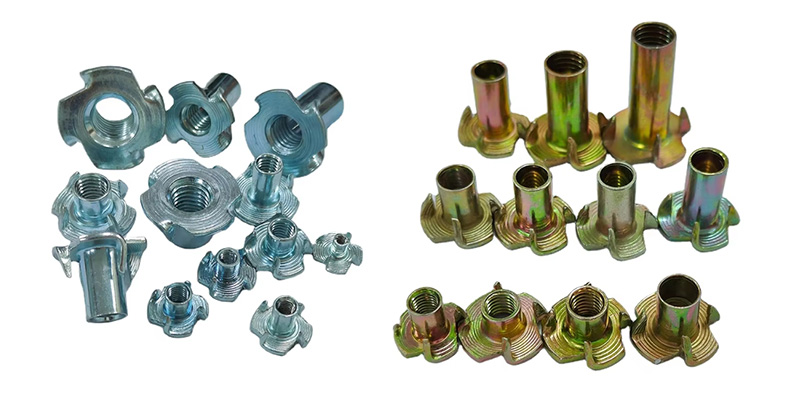
DIN 1624 T-Nuts
Four Prong T Nut Installation: Use the Right Hole Size
The hole size is one of the most important factors when installing a DIN 1624 4-prong T nut. If the hole is too small, the T nut barrel and prongs will create too much pressure on the wood, which may cause cracks around the installation area.
Before production or mass assembly, it is recommended to test the hole size according to the T nut dimensions and wood material. The hole should allow the T nut to fit properly while still providing enough grip from the prongs.
For materials such as MDF, plywood, and particle board, choosing the correct hole size is especially important because these materials are more sensitive to installation pressure.
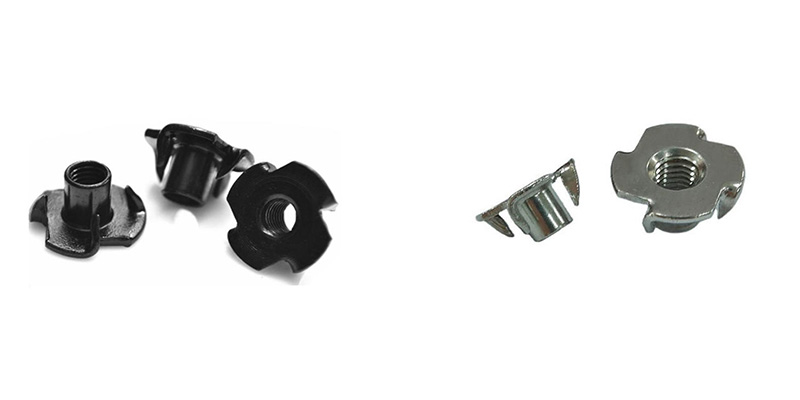
DIN 1624 T-Nuts
Four Prong T Nut Installation: Control Hammering Force
Another common reason for wood splitting is using excessive force during installation. Although the four prongs are designed to lock into the wood, heavy hammering can damage the board surface or deform the T nut.
During installation, apply force evenly and make sure the T nut is positioned straight before pressing it into the wood. For large production lines, using suitable installation equipment can also improve consistency and reduce material damage.
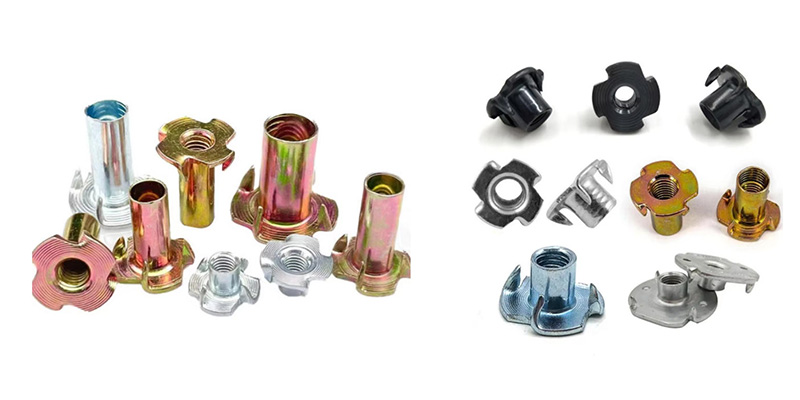
DIN 1624 T-Nuts
Four Prong T Nut Installation: Pay Attention to Wood Thickness
The thickness and type of wood will affect the installation result of 4-prong T nuts. Installing a large T nut on a thin wood panel may create unnecessary stress and increase the risk of cracking.
To avoid this issue:
- Choose a T nut size suitable for the wood thickness
- Keep enough distance from the edge of the board
- Avoid installing too many T nuts too close together
For furniture manufacturers, selecting the correct four prong T nut according to the application can help reduce assembly problems and improve production efficiency.
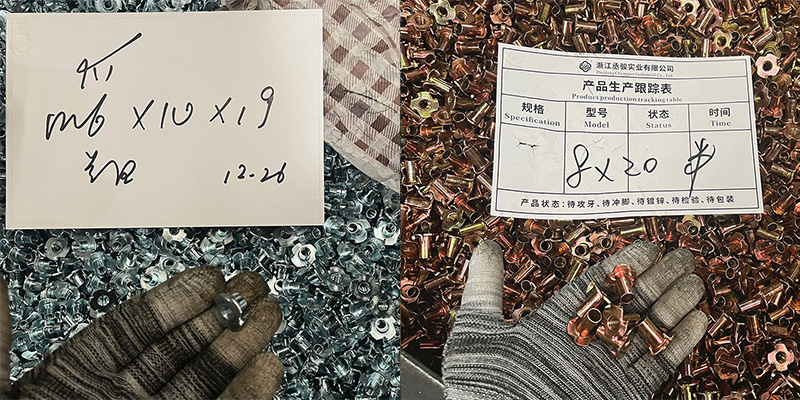
DIN 1624 T-Nuts
Four Prong T Nuts: Choose the Right Product for Your Application
Different applications require different four prong T nuts. Factors such as material, size, thread specification, and surface treatment should be considered before making a choice.
Four prong T nuts are widely used for:
- Wooden furniture assembly
- Sofa and chair components
- Cabinet and panel connections
- DIY woodworking projects
A suitable T nut not only provides a strong thread connection but also helps maintain the quality of the finished product.
Four Prong T Nuts from Xinchi Fastener Factory
Xinchi Fastener Factory has been specializing in fastener manufacturing since 2007. The factory is equipped with 102 cold heading machines, with a daily production capacity of more than 10 million pieces.
The new factory covers 30,000 square meters and includes two six-story buildings, providing strong production capacity for large-volume orders.
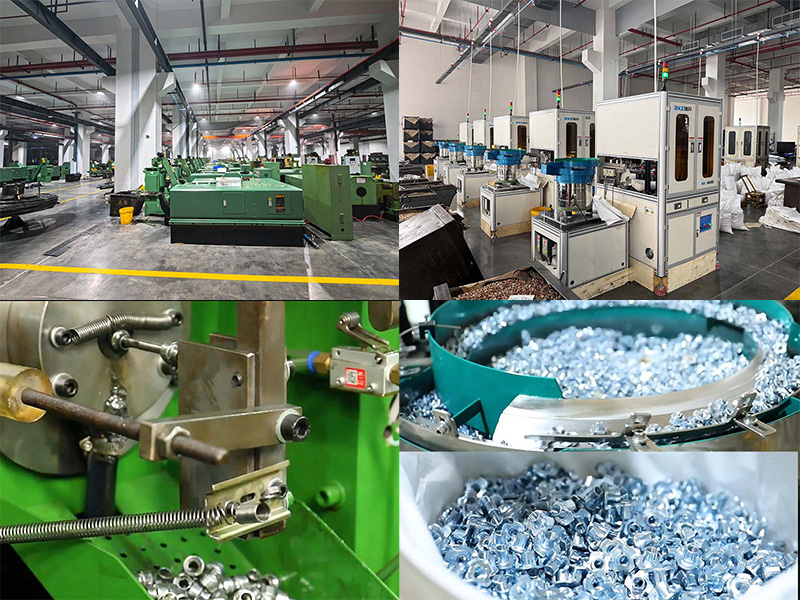
Xinchi Fastener Factory
With experience in manufacturing DIN1624 4-prong T nuts, Hopper Feed T nuts, thread insert nuts, rivet nuts, screws, bolts, washers, and other fasteners, Xinchi Fastener Factory focuses on stable product quality, efficient production, and customized solutions to meet different customer requirements.