

Rivet Nut vs Weld Nut: Which Fastener Is Better?
In many metal structures and equipment assemblies, people often face a very practical question: rivet nut vs weld nut — which one should you choose?
Both are widely used fastening solutions, but they differ quite a lot in installation method, manufacturing process, and application scenarios. Choosing the right one can save time and cost, while choosing the wrong one may lead to rework and higher expenses. As a professional fastener manufacturer, Xinchi is glad to introduce for you.
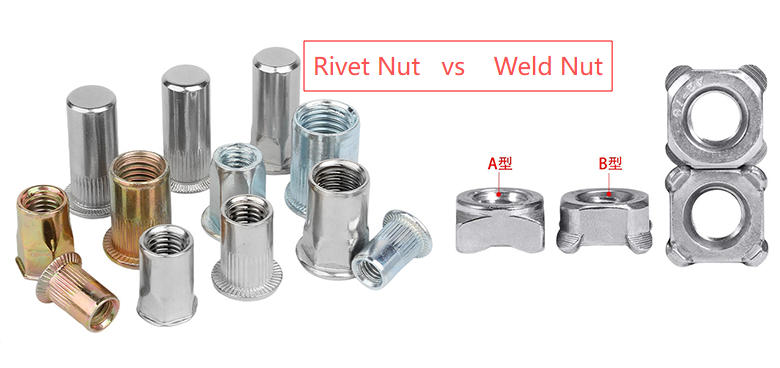
Rivet Nuts vs Weld Nuts
Rivet Nut vs Weld Nut in Fastening Applications: What’s the Real Difference?
When we talk about rivet nut vs weld nut, the key difference is not strength — it is the installation method.
A weld nut is fixed onto a metal sheet by welding, making it a permanent connection. It offers high structural stability and strong resistance to torque, which makes it suitable for heavy-load and high-vibration environments such as automotive structural parts, machinery frames, and steel structures.
A rivet nut, on the other hand, is installed using a riveting tool without welding. It clamps onto the sheet material through deformation, which means lower requirements for the base material and a much faster installation process.
In simple terms:
- weld nut = welded in place, strong but requires higher process control
- rivet nut = riveted in place, flexible and easier for light to medium loads
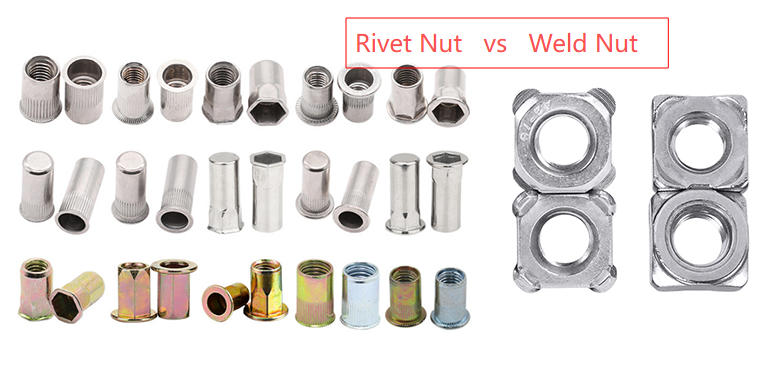
Rivet Nut vs Weld Nut
Weld Nut Applications & Weld Nut Alternative: Where It Really Matters
Many customers ask whether there is a weld nut alternative that is simpler to use. The answer depends heavily on production conditions.
In industrial manufacturing, weld nuts are still a very “heavy-duty” solution, especially in applications that require high structural strength — such as heavy equipment, automotive chassis, and steel frameworks. In these cases, welding is often unavoidable.
However, welding also comes with clear drawbacks:
It requires equipment, skilled labor, and additional anti-rust post-processing, which makes the overall production process longer and more complex.
That’s why in projects where welding is not preferred, many manufacturers start to consider alternatives like rivet nuts.
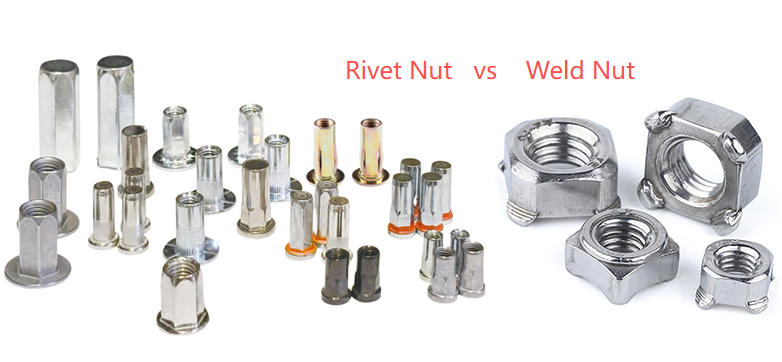
Rivet Nut vs Weld Nut
Rivet Nut Replacement for Weld Nut: When Can It Work?
The topic of rivet nut replacement for weld nut is becoming more common in lightweight design applications.
For example, in thin sheet structures, aluminum enclosures, electrical cabinets, and furniture assemblies, welding can easily cause deformation and requires extra finishing steps.
In these cases, rivet nuts offer clear advantages:
fast installation, single-side operation, and low requirements for base materials — no heat processing needed.
Especially in confined spaces or areas where welding is not possible, rivet nuts are often the more practical solution.
Of course, one point must be clear: in high-load or high-vibration environments, weld nuts are still the more reliable choice.
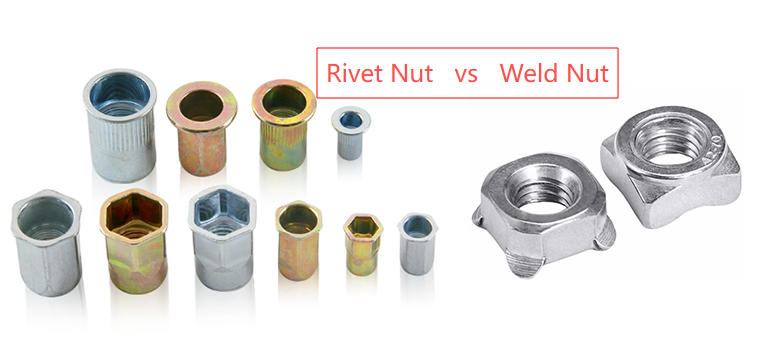
Rivet Nut vs Weld Nut
Rivet Nut vs Weld Nut Selection: How to Choose Without Mistakes
So, when it comes to rivet nut vs weld nut, how do you actually choose?
A simple way to decide:
If the structure is heavy-duty and you already have a welding production line, then weld nuts are more suitable.
If the structure uses thin sheets and you want higher assembly efficiency, rivet nuts are usually the better option.
In many real projects, it’s not about choosing one over the other — they are often used together depending on different positions and functional requirements.
Xinchi Fastener Factory: Reliable Partner for Fastener Supply
Xinchi Fastener Factory was established in 2007, specializing in the production of various industrial fasteners, including rivet nuts and weld nuts.
The factory is equipped with 102 cold heading machines and has a daily production capacity of over 10 million pieces, ensuring stable supply capability for large-volume orders. The newly built production base covers around 30,000 square meters, including two six-story manufacturing buildings, and continues to expand its overall capacity and delivery efficiency.
As a trusted fastener supplier, we can offer a wide range of high-quality fasteners, including nuts, screws, bolts, rivets, and washers, ensuring stable quality and reliable delivery for industrial applications.
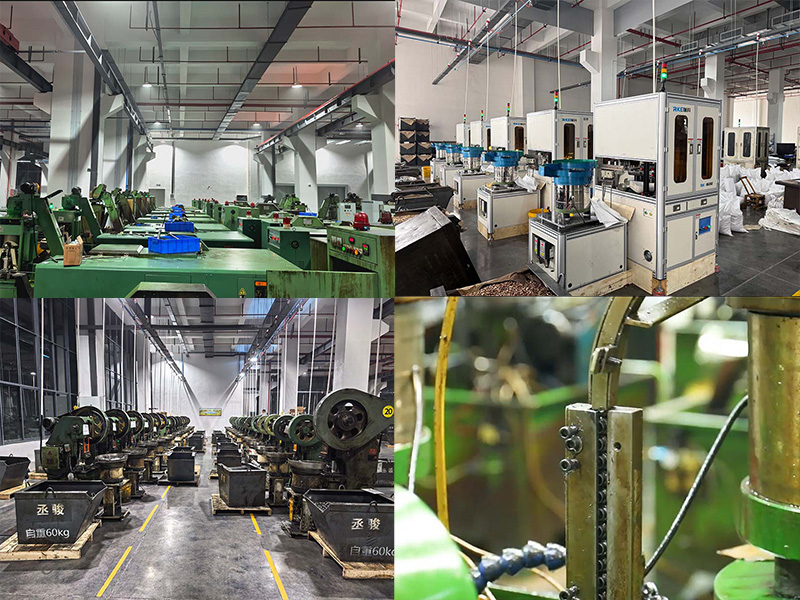
Xinchi Fastener Factory
In actual cooperation, besides standard models, OEM customization based on customer drawings is also available. Whether you are looking for a weld nut alternative or evaluating a rivet nut replacement for a weld nut, tailored solutions can be provided according to different structural requirements.