

Where Are Castle Nuts Used in Agricultural Equipment?
Agricultural equipment often works under vibration, changing loads, and outdoor conditions. In some assemblies, a standard hex nut is not enough to meet the fastening requirements. A mechanical locking method is also needed.
Castle nuts, also called castellated nuts, are used in certain agricultural machinery connections together with cotter pins. This combination helps prevent the nut from rotating loose while allowing the connection to be disassembled for maintenance.
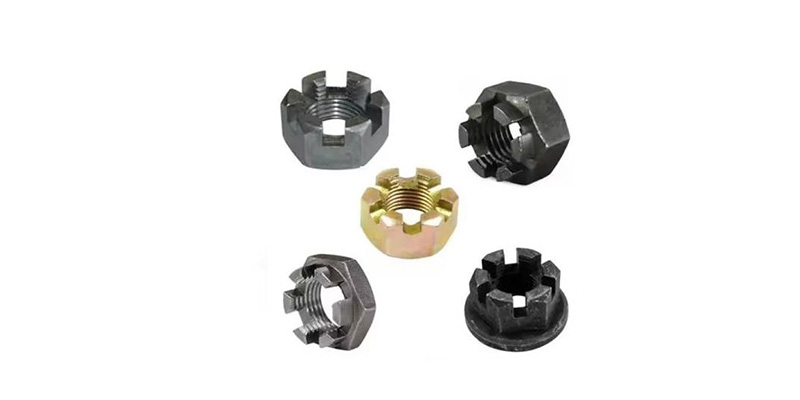
castle nut
How Do Castle Nuts Work?
A castle nut has several slots around its upper edge. These slots are designed to align with a cross-hole in a bolt, stud, or shaft.
After the nut is tightened according to the equipment manufacturer’s instructions, a cotter pin is inserted through the aligned slot and hole. The ends of the pin are then bent to keep it in position.
This creates a mechanical lock that helps prevent the nut from turning off the threaded part. It is particularly useful in assemblies where vibration and regular maintenance are concerns.
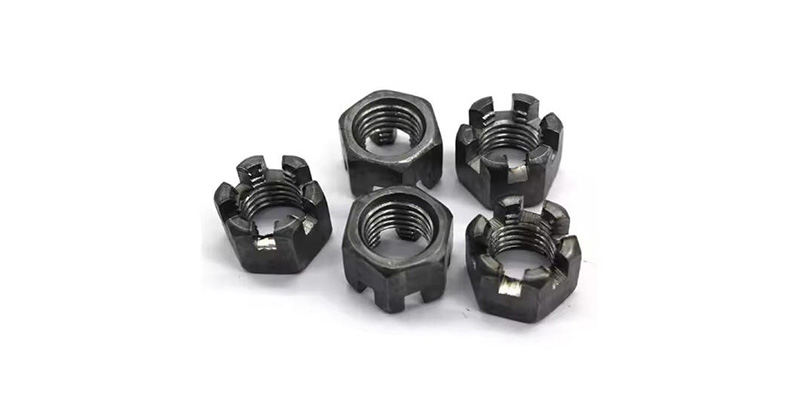
castle nut
Where Are Castle Nuts Used in Agricultural Equipment?
Castle nuts are used in different types of agricultural machinery, depending on the equipment design. Wheel axle assemblies are one documented example.
Trailer wheel hubs and axles: Some agricultural trailers use castle nuts and cotter pins to secure wheel axle components. For example, PRONAR’s T131 trailer manual describes this arrangement when adjusting wheel axle bearing clearance.
Tractor steering connections: Certain steering assemblies also use castle nuts with cotter pins to retain connected components. The exact arrangement depends on the tractor model and its design.
These applications show that castle nuts are useful where a threaded connection needs a mechanical locking feature and may need to be inspected or serviced.
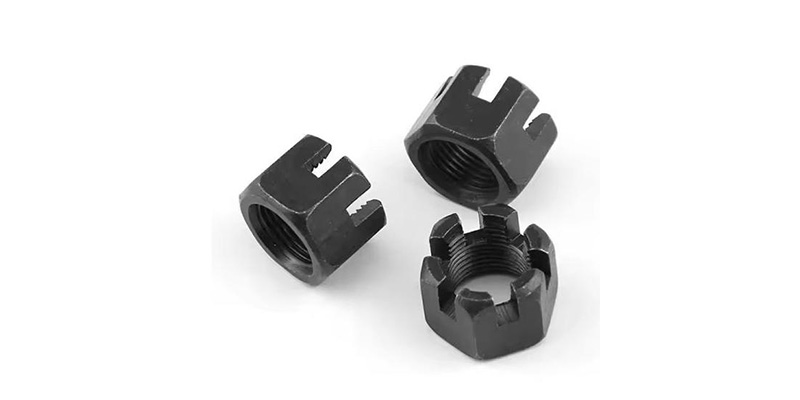
castle nut
Why Use Castle Nuts Instead of Standard Hex Nuts?
The main difference is the locking arrangement. A standard hex nut relies on thread engagement and the specified tightening method, while a castle nut can be secured with a cotter pin.
For agricultural equipment, this offers several practical advantages:
- Mechanical locking: The cotter pin helps prevent the nut from rotating loose.
- Easy inspection: It is relatively easy to check whether the cotter pin is installed.
- Convenient maintenance: The pin can be removed when the assembly needs to be serviced. A new cotter pin should be fitted during reassembly.
However, a castle nut does not replace correct tightening or bearing adjustment. For wheel hub applications, the manufacturer’s specified procedure must be followed to avoid excessive bearing preload.
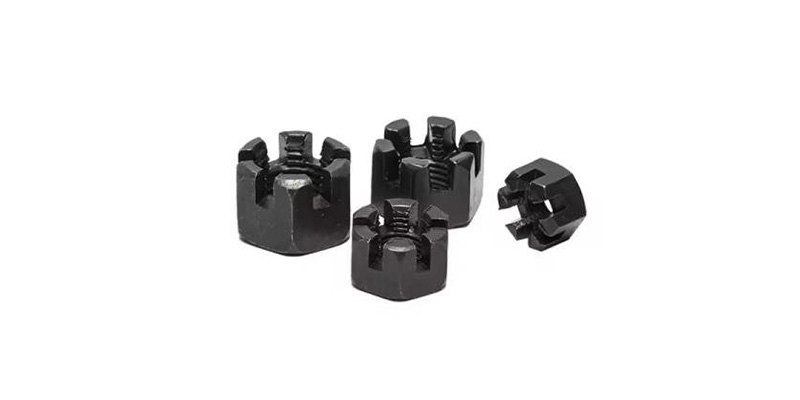
castle nut
What Should You Check When Selecting Castle Nuts?
When replacing or sourcing castle nuts, appearance alone is not enough. The nut must match the mating component and the equipment’s requirements.
Check the thread size and pitch, nut dimensions, slot dimensions, material, and surface finish. The cotter pin must also be compatible with the cross-hole and nut slots.
For replacement parts, the original part number or technical drawing is the best reference. Do not assume that castle nuts with the same thread size are interchangeable.
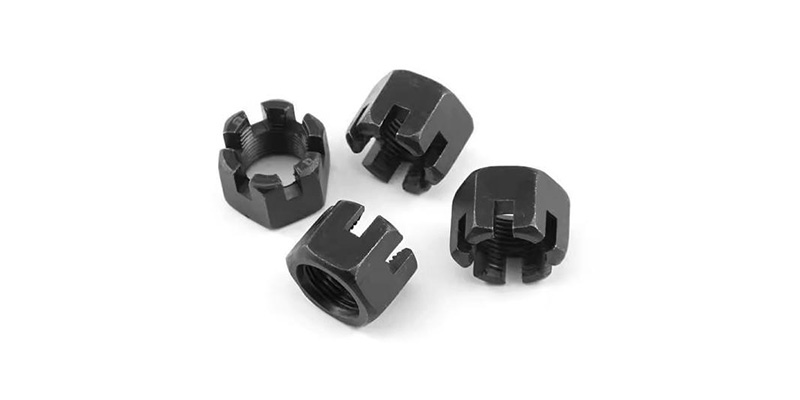
castle nut
Fastener Manufacturing at Xinchi Fastener Factory
Xinchi Fastener Factory was established in 2007. We have 102 cold heading machines, with a daily production capacity of more than 10 million pieces.
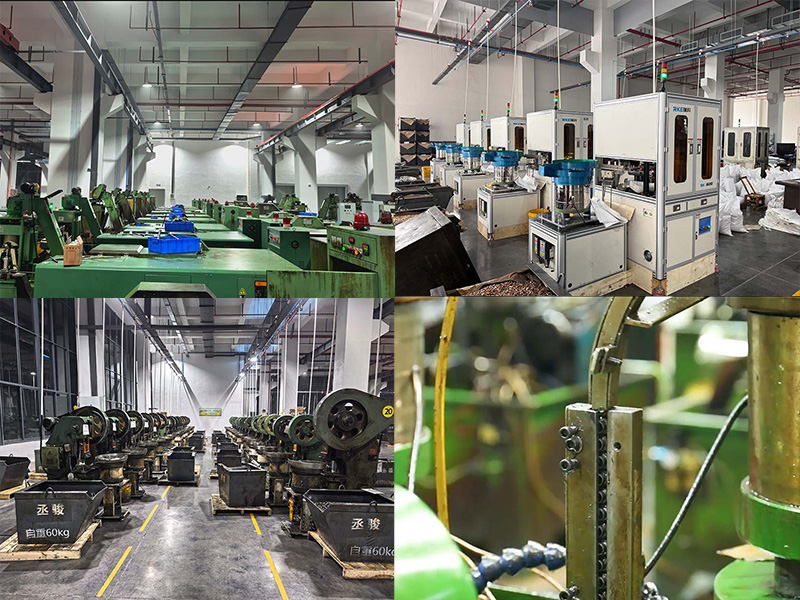
Xinchi Fastener Factory
Our completed new factory covers 30,000 square meters and consists of two six-story buildings. Our product range includes castle nuts, DIN1624 T nuts, rivet nuts, thread insert nuts, square weld nuts, hex weld nuts, Hopper Feed T Nuts, wing nuts, DIN 571 wood screws, bolts, washers, and other fasteners in different sizes for furniture and industrial applications.
Recent Comments