

Carbon Steel vs Stainless Steel: DIN1624 T Nut Material Selection Guide
In furniture production, wood structure connections, and general industrial assembly, the DIN1624 T Nut (four-prong tee nut) is a very common embedded fastener. Its stability and pull-out strength are closely related to the material choice. Carbon steel and stainless steel are the two most widely used options, but in real purchasing decisions, people often focus too much on price and ignore the actual working environment and service life.
As a professional T-nut manufacturer, Xinchi Fastener Factory is happy to introduce the difference more practically, hoping you can choose the right DIN1624 T Nut more easily.
Carbon Steel DIN1624 T Nut: Low Cost and Everyday Use
For most indoor furniture projects, carbon steel DIN1624 T Nuts are the default choice. The reason is simple: they are affordable, easy to produce, and widely available.
Usually, carbon steel versions come with surface treatments like zinc plating or nickel plating to improve basic rust resistance. In dry indoor conditions, this is generally enough for long-term use without problems.
You’ll often see carbon steel DIN1624 T Nuts in panel furniture, office desks, cabinets, and other wooden assemblies. In mass production, they help keep costs under control while still making installation efficient.
The only downside is that the protection depends on the surface coating. Once the coating is scratched or damaged, rust can appear if the environment is humid.
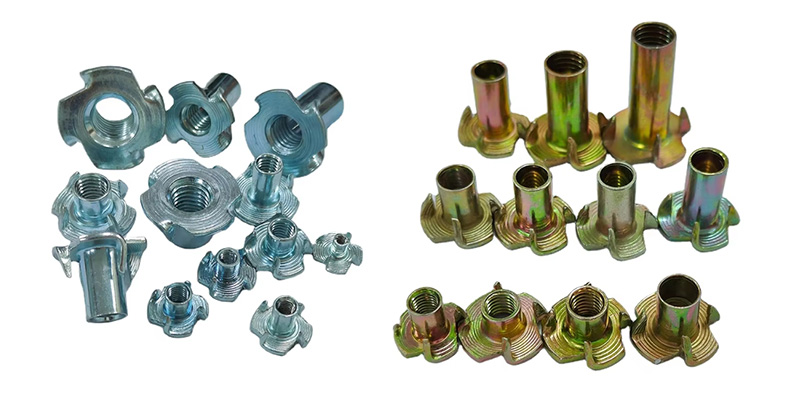
DIN 1624 T-Nuts
Stainless Steel DIN1624 T Nut: Better Protection for Harsh Environments
When the product is used outdoors or in damp conditions, stainless steel DIN1624 T Nuts are usually the safer option. The key difference is that stainless steel itself has corrosion resistance, so it doesn’t rely on plating.
Common grades are 304 and 316. 304 works well for general outdoor use, while 316 is better for coastal areas or places with high salt exposure.
In real applications, stainless steel DIN1624 T Nuts are used in outdoor furniture, garden structures, camping equipment, and higher-end wooden projects. The unit price is higher, but in return you get longer service life and fewer maintenance issues.
Installation-wise, stainless steel is slightly harder than carbon steel, so stamping and embedding need to be a bit more controlled.
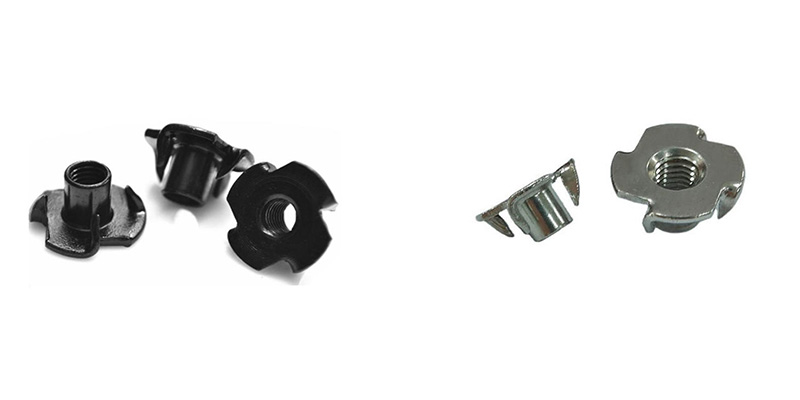
DIN 1624 T-Nuts
How to Choose DIN1624 T Nut: Carbon Steel or Stainless Steel?
The easiest way to decide is to look at where the product will be used.
If it’s indoor furniture—like wardrobes, desks, or office tables—carbon steel DIN1624 T Nuts are usually more than enough. The environment is stable, and the cost advantage is clear.
If it’s exposed to moisture, outdoor weather, or coastal conditions, then stainless steel is the better choice. It helps avoid rust-related loosening and reduces long-term maintenance trouble.
In short:
- Carbon steel = cost-efficient, indoor, high-volume use
- Stainless steel = durable, outdoor, long-term reliability
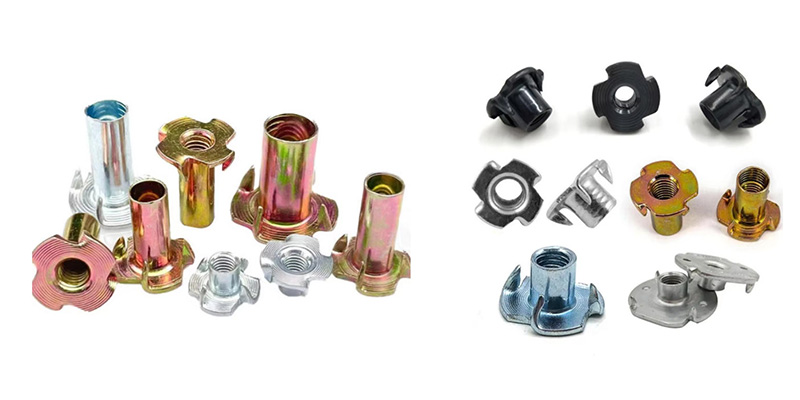
DIN 1624 T-Nuts
DIN1624 T Nut in Furniture and Wood Projects
In furniture manufacturing, DIN1624 T Nuts are used everywhere, but the material often changes the product level.
Carbon steel versions are commonly used in standard production—flat-pack furniture, office furniture, and general wood connections. The focus is speed and cost control.
Stainless steel versions are more common in outdoor or high-end projects, such as garden benches, wooden platforms, and playground equipment. These applications care more about safety and long-term stability.
So in many cases, buyers don’t just look at unit price—they look at the final product positioning and long-term risk.
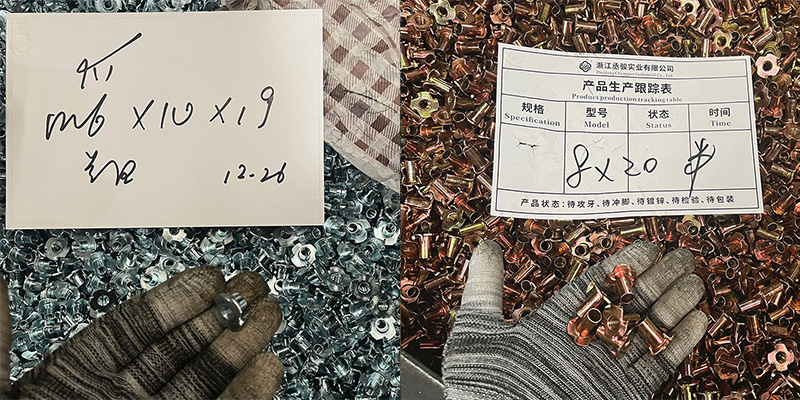
DIN 1624 T-Nuts
Cost vs Lifespan: The Real Decision Behind DIN1624 T Nut
Choosing between carbon steel and stainless steel is really a trade-off between upfront cost and long-term maintenance.
Carbon steel is cheaper and works well for large-scale production, but in poor environments it may lead to extra replacement costs later.
Stainless steel costs more at the beginning, but it stays stable for years and reduces after-sales issues, especially for export or premium markets.
So the smarter way to think about it is not “which is cheaper per piece”, but “which costs less over the full product life”.
DIN1624 T Nut Manufacturing Support from Xinchi Factory
As a fastener manufacturer, Xinchi Fastener Factory focuses on stable production of DIN1624 T Nuts with large-scale capacity.
Founded in 2007, the factory has 102 cold heading machines and a daily output of over 10 million fasteners. The production area is around 30,000 sqm, with modern workshop and warehouse buildings, supporting bulk orders and stable delivery.
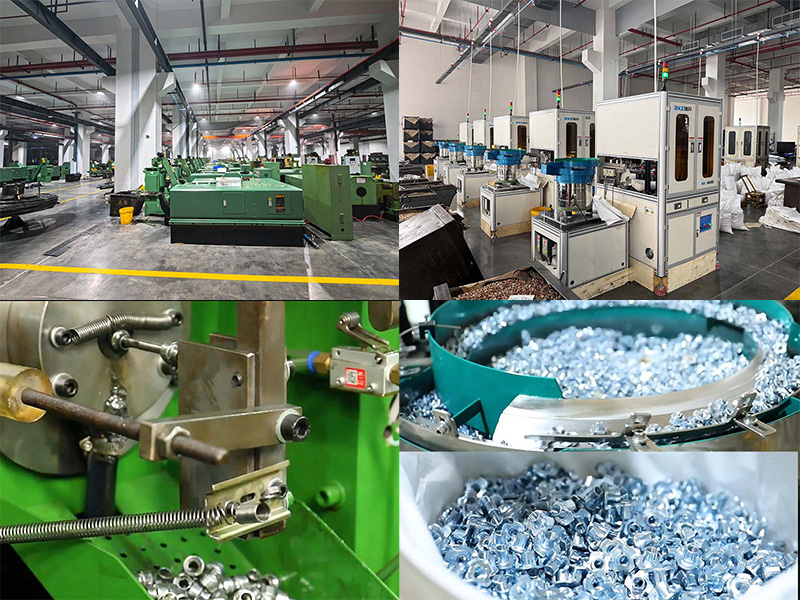
Xinchi Fastener Factory
As a trusted fastener supplier, we can offer a wide range of high-quality fasteners, including nuts, screws, bolts, rivets, and washers. In production, Xinchi covers stamping, heat treatment, and surface finishing with a fairly mature process system. Depending on customer needs, they can supply carbon steel with different plating options or stainless steel materials.
For buyers who care about stable supply and long-term cooperation, this kind of capacity helps reduce delivery risk and keeps sourcing more predictable.