

How to Install Rivet Nuts Correctly
Rivet nuts are widely used in sheet metal, automotive parts, furniture, and industrial equipment to provide a threaded connection where access to the back is limited. As a fastener manufacturer, Xinchi Fastener Factory supplies different types of rivet nuts for various fastening applications.
Choosing the right rivet nut and installing it correctly are both important for a secure connection. Common designs include flat head, reduced head, knurled body, and hex body rivet nuts, each suited to different installation requirements.
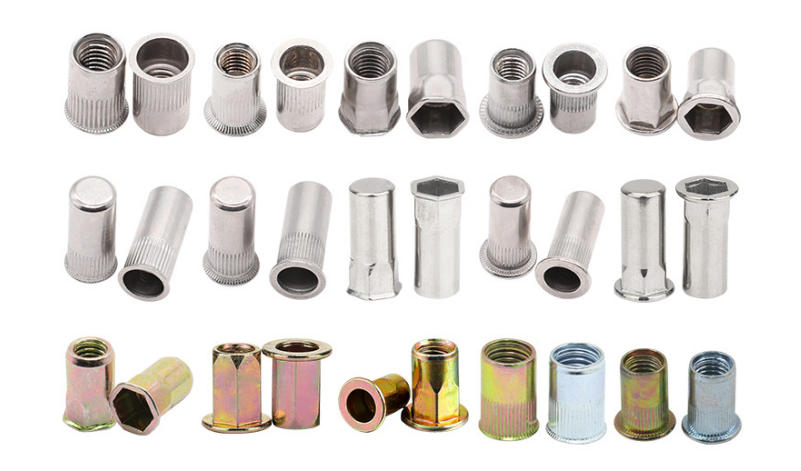
rivet nut
Tools for Rivet Nut Installation
Before installing rivet nuts, check the fastener specifications and prepare the necessary tools. The hole size and material thickness must match the selected rivet nut.
You will typically need a rivet nut installation tool, a drill with the correct drill bit, and a measuring tool to check the hole diameter. Make sure the rivet nut has the correct thread size and grip range for your application.
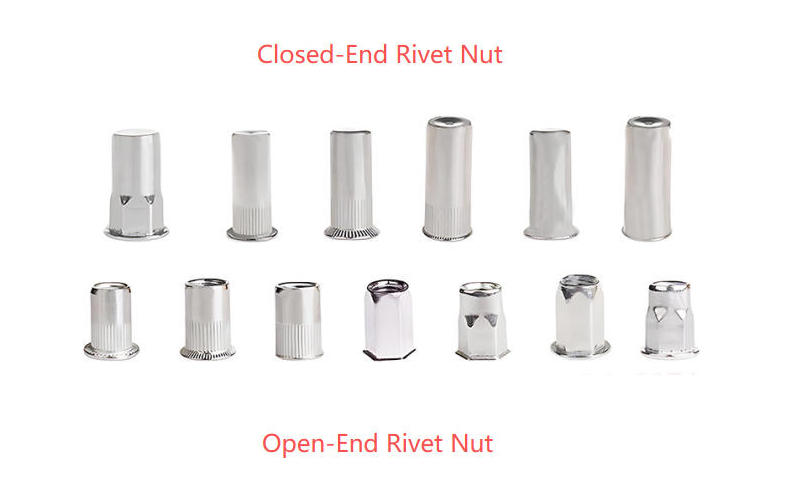
Open End and Closed End Rivet Nuts
How to Install Rivet Nuts
Installing rivet nuts is straightforward when the hole is properly prepared and the correct tool is used.
Drill the hole. Drill the hole to the diameter specified for the rivet nut. A hole that is too large may cause the rivet nut to spin, while a hole that is too small can make installation difficult.
Insert the rivet nut. Place the rivet nut on the installation tool and insert it into the hole. The head should sit correctly against the material surface. For countersunk head knurled body rivet nuts, prepare the required countersink so the head can sit flush with the surface.
Set the rivet nut. Operate the installation tool according to its instructions. The rivet nut body deforms behind the material, securing the fastener and creating an internal thread for a bolt or screw.
Check the installation. Remove the tool and check that the rivet nut sits firmly against the surface. It should not rotate or move, and the internal thread should remain undamaged.

rivet nuts
Choosing the Right Rivet Nuts
Rivet nuts are available in different head styles, body shapes, materials, and end designs. The right option depends on the installation space, material, and fastening requirements.
Flat head knurled body rivet nuts are a common choice for general applications, while reduced head knurled body rivet nuts are useful when a lower-profile head is needed. For applications where resistance to rotation is important, flat head semi-hex body rivet nuts and flat head full hex body rivet nuts may be suitable.
If the application requires a closed end, flat head knurled body closed-end rivet nuts and reduced head knurled body closed-end rivet nuts are options to consider. Material is another important factor. Stainless steel flat head knurled body rivet nuts and stainless steel reduced head knurled body rivet nuts may be suitable for applications requiring better corrosion resistance.
Before ordering, check the thread size, grip range, hole diameter, head style, body shape, and material to ensure the rivet nut matches the application.
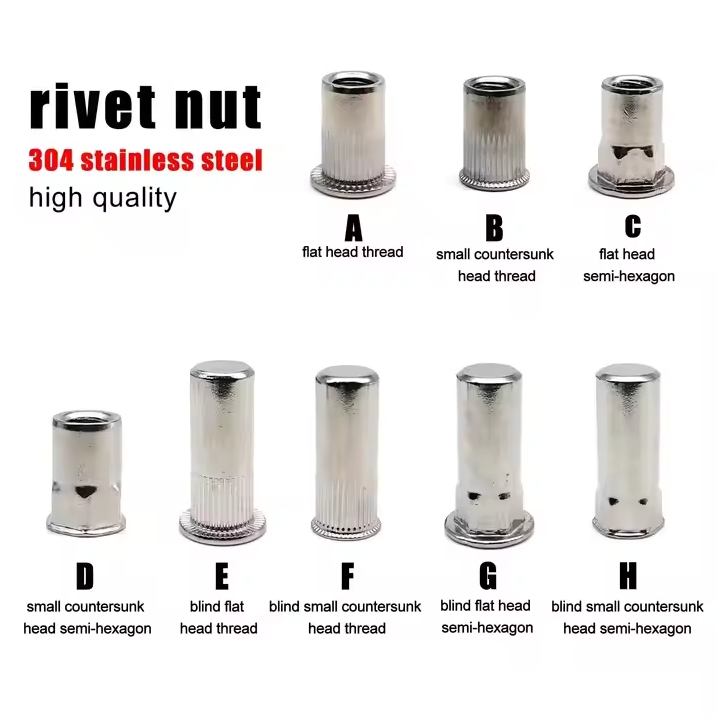
Stainless Steel Rivet Nut
Rivet Nuts from Xinchi Fastener Factory
Established in 2007, Xinchi Fastener Factory has 102 cold heading machines and a daily production capacity of over 10 million pieces. Our newly completed factory covers 30,000 square meters across two six-story buildings.
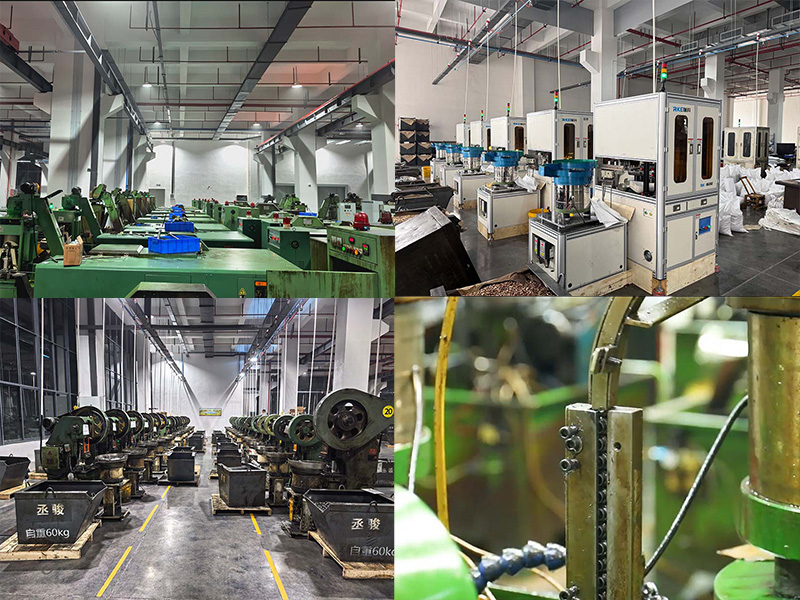
Xinchi Fastener Factory
In addition to rivet nuts, we supply DIN 1624 T nuts, square weld nuts, hex weld nuts, Hopper Feed T Nuts, threaded insert nuts, and other fasteners. Custom specifications and packaging can be discussed to meet different project requirements.
Recent Comments